When a process plant loses heat along a pipe run, the result is rarely a sudden failure. It is a gradual problem: a viscous fluid becomes harder to pump, a water line develops ice that restricts flow, or the contents of a storage tank cool enough that the downstream process cannot maintain its designed rate. Electric heat tracing is the engineering answer to these issues, and it is one of the most dependable ways to keep pipes, tanks, valves, and instruments at the temperature they need.
What Is Electric Heat Tracing?
Electric heat tracing, also known as trace heating, is a method of applying heat directly to the surface of pipes and vessels using specially designed heating cables. The cables run along the length of the pipe, are covered with thermal insulation, and are connected to a power supply. When energized, each meter of cable emits a controlled amount of heat that compensates for the heat lost to the surrounding environment.
The principle is simple, but the engineering behind it matters. A correctly designed heat tracing system must account for pipe diameter, insulation thickness, ambient temperature, wind exposure, and the target process temperature. When those variables are calculated correctly, the system keeps the fluid temperature stable regardless of outside conditions. When they are not, it either underperforms and wastes energy or overheats and risks damaging the pipe contents or the cable itself.
Main Types of Electric Heat Tracing Cables
Three cable technologies dominate industrial heat tracing. Each one has distinct electrical characteristics, field installation behavior, and application ranges.
Self-Regulating Cables
Self-regulating cables are the most common choice for freeze protection and general temperature maintenance. Their core is a conductive polymer whose resistance changes with temperature. As the pipe warms, the polymer resistance rises and heat output falls. As the pipe cools, resistance drops and heat output increases. This gives the cable a built-in safety behavior: it cannot overheat itself, even where two runs cross or where insulation is heavier than specified.
These cables can be cut to length on site and terminated with standard connection kits. They are a reliable default option for water lines, instrument tubing, and general industrial piping. When higher service temperatures are required, a high-temperature freeze protection trace heater extends the same self-regulating principle to more demanding thermal conditions.
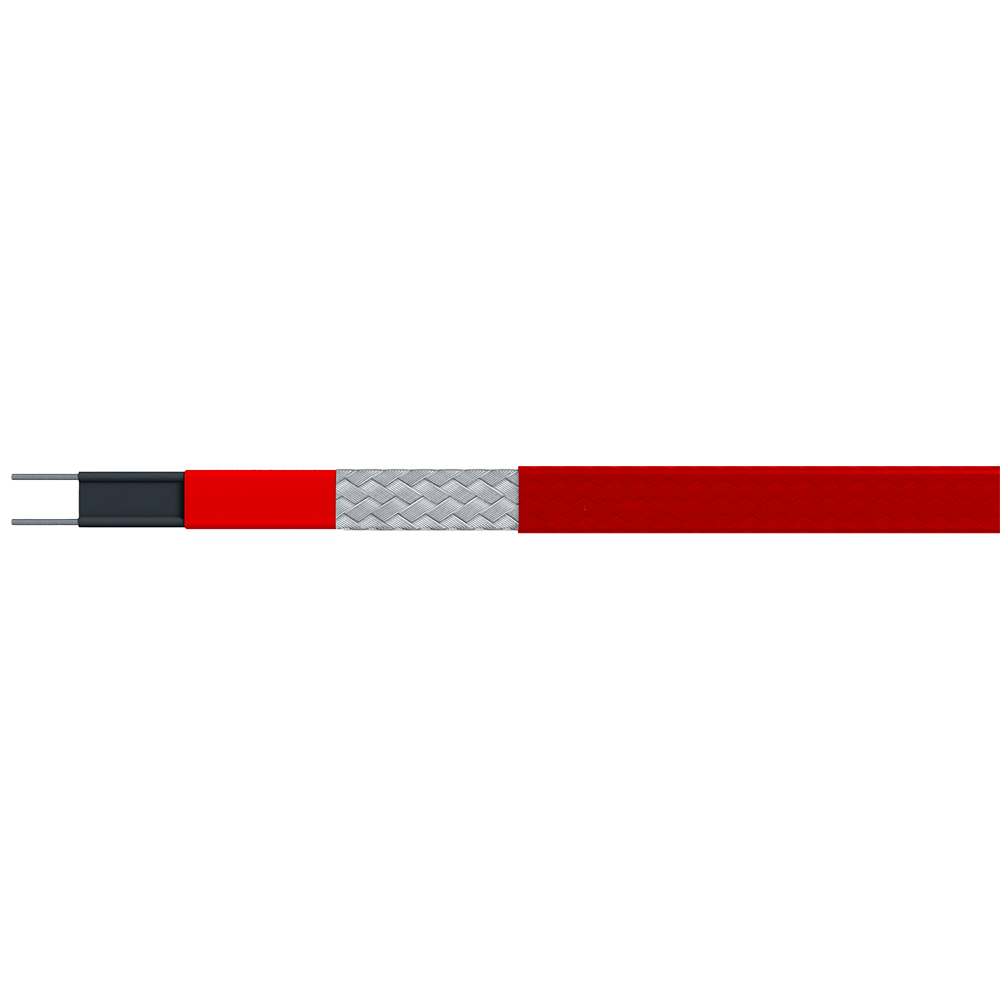 Freeze Protection High Temperature Trace Heater Suppliers, Company - Jiangsu WeiWeineng Electric is China wholesale Freeze Protection High Temperature Trace Heaters suppliers and Freeze Protection High Temperature Tra...View Product →
Constant Wattage Cables
Constant wattage cables use resistive heating elements spaced at fixed intervals along the cable. Unlike self-regulating cables, their power output per meter does not vary with temperature, so they provide uniform heat along the entire circuit. That consistency is useful when the process must receive a precise and stable amount of energy.
The tradeoff is that constant wattage cables must be designed for the exact circuit length and cannot be cut in the field without changing the resistance and power output. They are often selected for longer pipe runs, steam-traced line replacement, and processes that require a fixed temperature profile. A constant wattage three-phase trace heater is a typical choice for large industrial circuits where three-phase power is available and a higher total output is needed.
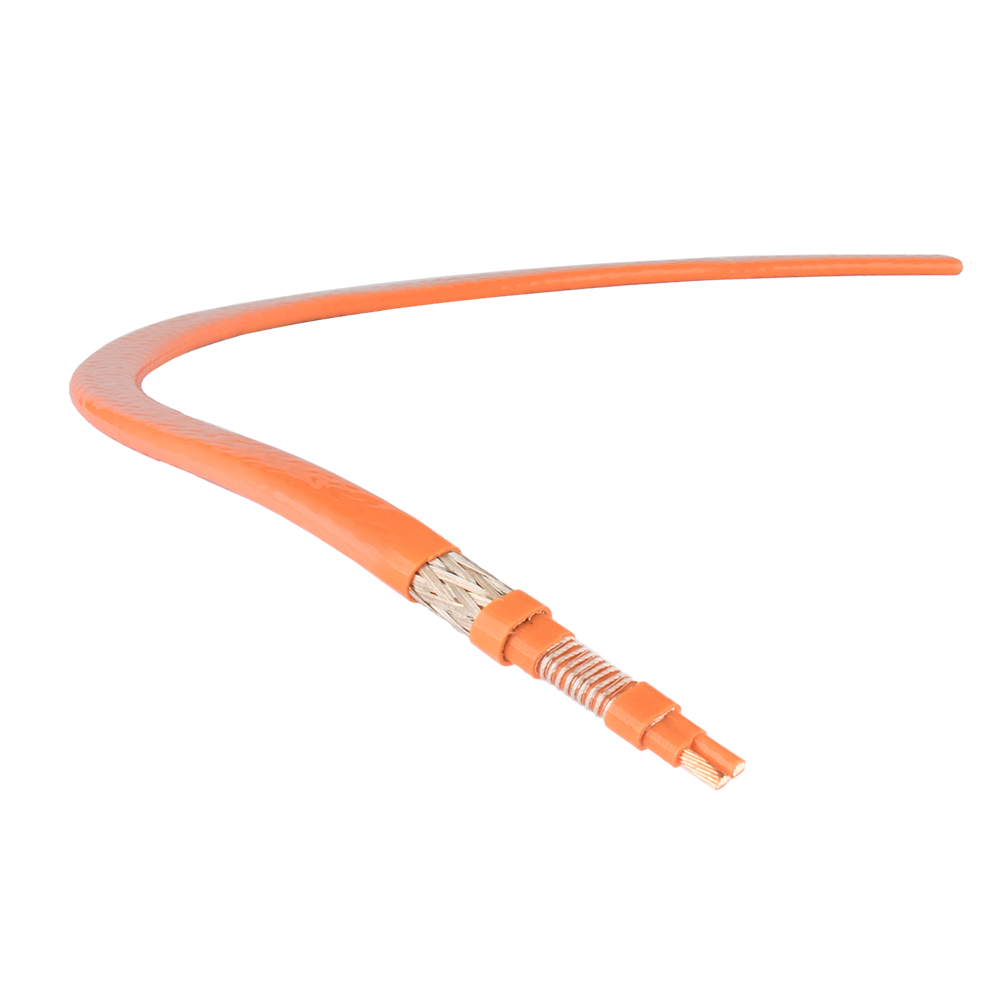 Constant Wattage Three-phase Trace Heater Suppliers, Company - Jiangsu Weineng EWeineng Electric is China wholesale Constant Wattage Three-phase Trace Heaters suppliers and Constant Wattage Three-phase Trace Heater co...View Product →
Series Resistance Cables
Series resistance cables, also called constant power series cables, use a single resistive conductor along the full circuit length. They produce the highest output per meter of the three types and are used for very long pipe runs, such as pipelines spanning kilometers. Because these cables are manufactured to a specified length and resistance, they are not adjustable in the field. For large-diameter pipes and high-temperature duties, they are sometimes the only practical solution.
Comparison of Cable Technologies
Typical characteristics of the three main electric heat tracing cable technologies
| Characteristic |
Self-Regulating |
Constant Wattage |
Series Resistance |
| Heat output behavior |
Varies with temperature |
Fixed output |
Fixed output |
| Field cutting |
Yes, cut to length |
No, factory determined |
No, factory determined |
| Typical circuit length |
Short to medium |
Medium to long |
Very long |
| Common applications |
Freeze protection, small bore pipes |
Process temperature maintenance |
Long pipelines, high wattage |
| Overheating risk |
Low, self-limiting |
Requires careful control |
Requires careful control |
Primary Applications of Electric Heat Tracing
Freeze Protection
The largest single use for electric heat tracing is freeze protection. Water pipes, fire protection lines, condensate return lines, and cooling water systems can freeze when ambient temperatures drop below zero. A heat tracing cable keeps the fluid above the freezing point, preventing pipe rupture and avoiding costly downtime. In cold climates, outdoor freeze protection systems often run continuously through the winter, so reliability and energy efficiency are critical selection criteria.
Temperature Maintenance
Many industrial fluids must be held inside a defined temperature range. Heavy fuel oil becomes too viscous to pump when cold; bitumen must stay hot; chemical solutions can crystallize or precipitate; food products such as chocolate and syrups require precise temperature control to remain processable. Electric heat tracing maintains these fluids at the right temperature along the whole flow path, from storage tank to point of use. A low-temperature maintenance trace heater is designed for this kind of duty, holding lines and tanks at a steady temperature without the energy waste of oversized equipment.
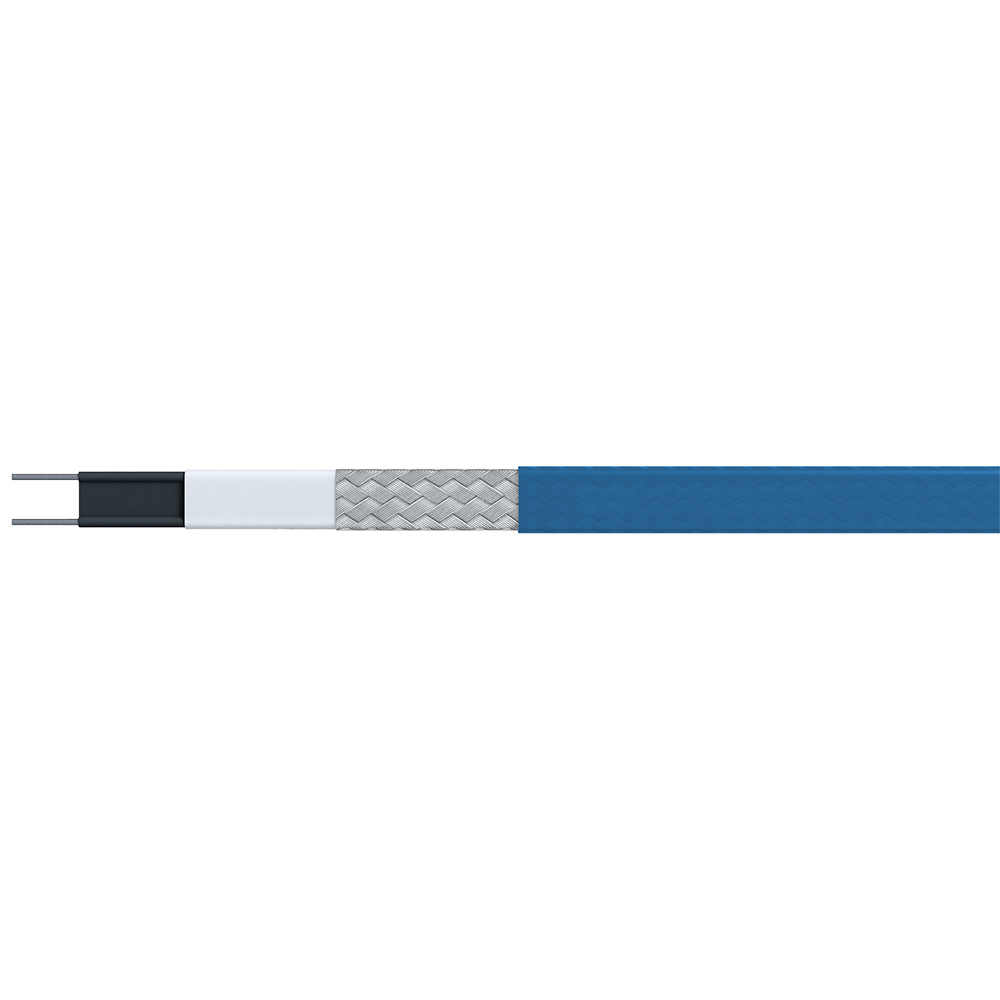 Temperature Maintenance Low Temperature Trace Heater Suppliers, Company - JiangsWeineng Electric is China wholesale Temperature Maintenance Low Temperature Trace Heaters suppliers and Temperature Maintenance Low Tempe...View Product →
Industrial Process Heating
Beyond freeze protection and viscosity control, heat tracing is used where process reactions or fluid transfer require a minimum temperature. Examples include gas pipelines where hydrate formation is a risk, chemical reactor feed lines that handle temperature-sensitive media, and sampling lines that must deliver representative samples without condensation or solidification.
Hazardous Area Installations
In refineries, chemical plants, and other sites with potentially explosive atmospheres, heat tracing must meet strict safety standards. Cables and control equipment need appropriate explosion protection ratings, and the design must follow the area classification of the installation. The control equipment often needs to be housed in a flameproof cabinet so the system can operate safely in a classified zone.
Selecting the Right Heat Tracing System
Choosing a heat tracing system is not simply picking a cable from a catalog. The design process starts with a heat loss calculation for each pipe or vessel. That calculation considers the pipe diameter, wall thickness, insulation type and thickness, the lowest ambient temperature, and the required maintain temperature. From it, the designer determines the required wattage per meter, the cable spacing, and the total circuit length.
Key Selection Factors
- Maintain temperature: the temperature the pipe contents must hold, which determines the cable class.
- Maximum exposure temperature: the highest temperature the cable may see, from the pipe itself or from steam cleaning.
- Circuit length and voltage: longer circuits may require higher voltage or a different cable type.
- Area classification: whether the installation is in a hazardous location that requires certified components.
- Control and monitoring: whether the system needs thermostatic control, alarms, or remote monitoring.
- Chemical and moisture exposure: whether the cable jacket and insulation must resist specific chemicals, water, or UV.
Control and Monitoring
A heat tracing system is only as reliable as its control loop. Most systems use a thermostat or temperature controller that energizes the circuit when the pipe temperature falls below the set point and de-energizes it once the temperature is reached. For critical applications, a dedicated control cabinet provides overcurrent protection, ground fault protection, and alarm signaling. In hazardous areas, the control cabinet must be explosion-proof and match the certification of the cable itself.
Installation and Inspection Considerations
Field installation requires attention to detail. The cable must be laid evenly along the pipe, secured at regular intervals, and kept clear of flanges, valves, and supports where heat loss is higher or mechanical damage is possible. On metal pipes, the tracer is often installed with a slight spiral to cover the full circumference. Thermal insulation is then applied over the cable, and the system is energized only after an insulation resistance test confirms the integrity of every circuit.
Inspection is equally important. A typical pre-commissioning procedure includes a visual check of the cable layout, a continuity test, an insulation resistance measurement, and verification of the thermostat set points. These tests confirm that every circuit is properly connected and safe to energize. More detailed construction techniques and inspection standards for electric heat tracing are available for teams that need a structured acceptance process.
Electric heat tracing solves a recurring industrial problem: keeping fluids at the right temperature over long distances and through changing ambient conditions. The correct system depends on the fluid, the pipe geometry, the site environment, and the applicable safety requirements. Self-regulating cables cover most freeze protection and general maintenance duties, while constant wattage and series resistance cables handle longer circuits and higher temperatures. With proper selection, control, and installation, a heat tracing system will run reliably for years, consuming only the energy it needs and protecting the process from cold weather and temperature loss.
Engineers and procurement teams should work with a manufacturer that can provide both the hardware and the engineering input. A supplier with a certification and patent record in industrial heating is better positioned to design a heat tracing solution that integrates cleanly with the rest of the plant's heating and control infrastructure.

 English
 русский
 Français
 Español
 عربى
عربى
