Most heating cables deliver a fixed output regardless of what the pipe actually needs. Self-regulating heat trace does the opposite: it produces more heat where the pipe is coldest and automatically backs off where the pipe is already warm. That single behavioral difference determines most of its advantages over other trace heating technologies — and most of the reasons it has become the dominant cable type for industrial and commercial freeze protection.
The Physics Behind Self-Regulation
A self-regulating heating cable is built around a conductive polymer core — a specially formulated carbon-loaded plastic matrix — embedded between two parallel copper bus wires. When electrical current flows between those bus wires through the conductive core, resistance in the polymer generates heat. What makes this cable different from a standard resistive element is what happens to that polymer as temperature changes.
At low temperatures, the polymer core is relatively dense and compact at the molecular level. The carbon particles within it are closely spaced, forming a large number of conductive pathways between the bus wires. More pathways mean lower overall resistance, which means more current flows and more heat is generated — exactly the response needed when a pipe is cold.
As the cable warms the pipe and the core temperature rises, the polymer undergoes microscopic expansion. This expansion opens gaps in the carbon particle matrix, reducing the number of complete electrical pathways. Fewer pathways means higher resistance, which means less current and less heat output — automatically, with no external control signal required. The cable is, in effect, thermally self-throttling.
This behavior is described technically as a positive temperature coefficient (PTC) response: as temperature increases, resistance increases. The effect occurs independently at every point along the cable's length, which means a cold section of pipe next to a warm section will receive more heat without any averaging or redistribution effect. Each section of cable responds to its own local conditions simultaneously.
Key Advantages Over Constant Wattage Cable
The contrast with constant wattage cable makes the operational advantages of self-regulating technology concrete.
A constant wattage cable delivers the same power output per meter regardless of pipe temperature. In a system where some sections of pipe are exposed to colder conditions than others — corners near building penetrations, sections near a cold wall, valve bodies with higher heat loss — the cable cannot distinguish between them. Every meter gets the same heat input whether or not it needs it. This either means the coldest sections are undersupplied (pipe freezes there first) or the warmest sections are oversupplied (energy waste, potential thermal damage to pipe coating).
Self-regulating cable resolves both problems automatically. Cold spots receive elevated output; warm spots receive reduced output. The result is a more uniform pipe temperature along the entire circuit and lower overall energy consumption — because power is only delivered where and when it is needed.
Self-regulating vs. constant wattage trace heating — key characteristics
| Characteristic |
Self-Regulating |
Constant Wattage |
| Power output |
Variable — responds to local pipe temperature |
Fixed — same output per meter along full length |
| Energy efficiency |
High — output reduces as pipe warms |
Lower — full power delivered continuously |
| Overheat risk |
Low — output self-limits as temperature rises |
Higher — requires accurate thermostat control |
| Cable overlap at valves |
Safe — self-limits to prevent hot spots |
Not permitted — causes burnout at overlap |
| Cut-to-length on site |
Yes |
Parallel type: yes. Series type: no |
| Max maintain temperature |
Typically up to 150°C (medium-temp grades) |
Up to 250°C+ depending on type |
| Best applications |
Freeze protection, low/medium temp maintenance |
Long circuits, high-temperature process maintenance |
Installation Advantages
Self-regulating cable's ability to be cut to length on site is one of its most practically significant features. A roll of cable can be cut to match the exact run length of each pipe circuit — including allowances for valve loops, pipe support bridges, and instrument connections — without any circuit redesign. This eliminates the pre-cut, pre-calculated circuit lengths that series-resistance constant wattage cables require and simplifies installation considerably on complex pipe arrangements.
The ability to safely overlap at valves and flanges — where the cable must be looped back on itself to deliver additional heat — removes a significant installation constraint. With other cable types, overlapping creates a hot spot that will burn out the cable at that location over time. Self-regulating cable's PTC response prevents the overlap point from overheating, because the increased local temperature reduces its own output automatically.
Flexibility is another practical advantage. Self-regulating cables are typically more flexible than mineral-insulated cables, allowing them to conform to irregular pipe profiles, complex valve bodies, and instrumentation clusters without requiring special bending tools or risking jacket damage during installation.
Limitations and When to Specify Other Technologies
Self-regulating cable is not universally the best choice for every pipework application. Understanding its limits determines when an alternative is appropriate.
The primary limitation is maximum maintain temperature. Standard self-regulating cables are rated to maintain temperatures up to approximately 65–80°C, with medium-temperature grades reaching 120–150°C. For process pipework that requires maintain temperatures above this — sulfur lines, heavy fuel oil systems, high-temperature chemical processes — constant wattage parallel cable or mineral-insulated cable must be specified instead.
Self-regulating cable also draws higher inrush current at startup in cold conditions, because the cold polymer core has low resistance and allows maximum current to flow before it warms up. This inrush — which can be several times the steady-state operating current — must be accounted for in circuit breaker and distribution panel sizing. Failure to allow for inrush current is a common cause of nuisance tripping in self-regulating trace heating systems.
Finally, the term "self-regulating" can mislead engineers into omitting thermostatic control. The cable limits its own maximum temperature, but it cannot turn itself off when ambient conditions warm up. Without a thermostat, the cable will continue drawing power even when the pipe no longer needs heat — consuming energy unnecessarily. A thermostat remains essential for energy-efficient operation of any self-regulating system. For hazardous areas, this control must come from a certified heat trace control cabinet for hazardous locations.
Selecting the Right Self-Regulating Cable Grade
Self-regulating cables are available in several power output grades — expressed in watts per meter (W/m) at a reference temperature, typically 10°C — and temperature classifications. Selection depends on three main factors: the required maintain temperature, the minimum ambient temperature the circuit will experience, and the pipe insulation specification.
Lower-output grades (typically 8–15 W/m) are sufficient for standard freeze protection on water service pipes and light process lines with good insulation. Higher-output grades (20–40 W/m or above) are needed for larger diameter pipes, poorly insulated runs, pipes in particularly cold or wind-exposed locations, or applications with higher maintain temperature requirements.
Jacket material selection matters in chemically aggressive or outdoor environments. Standard polyolefin outer jackets suit most applications. Fluoropolymer jackets are specified where the cable will be exposed to corrosive chemicals, aggressive solvents, or UV radiation over extended periods.
The low-temperature self-regulating trace heaters in the product range cover standard freeze protection and temperature maintenance applications up to moderate maintain temperatures. For more demanding conditions, high-temperature trace heaters extend performance to applications where elevated maintain temperatures or higher exposure temperatures are required. Where self-regulating technology does not meet the application requirement, flexible constant power heating cables provide an alternative with consistent output across the full circuit length.
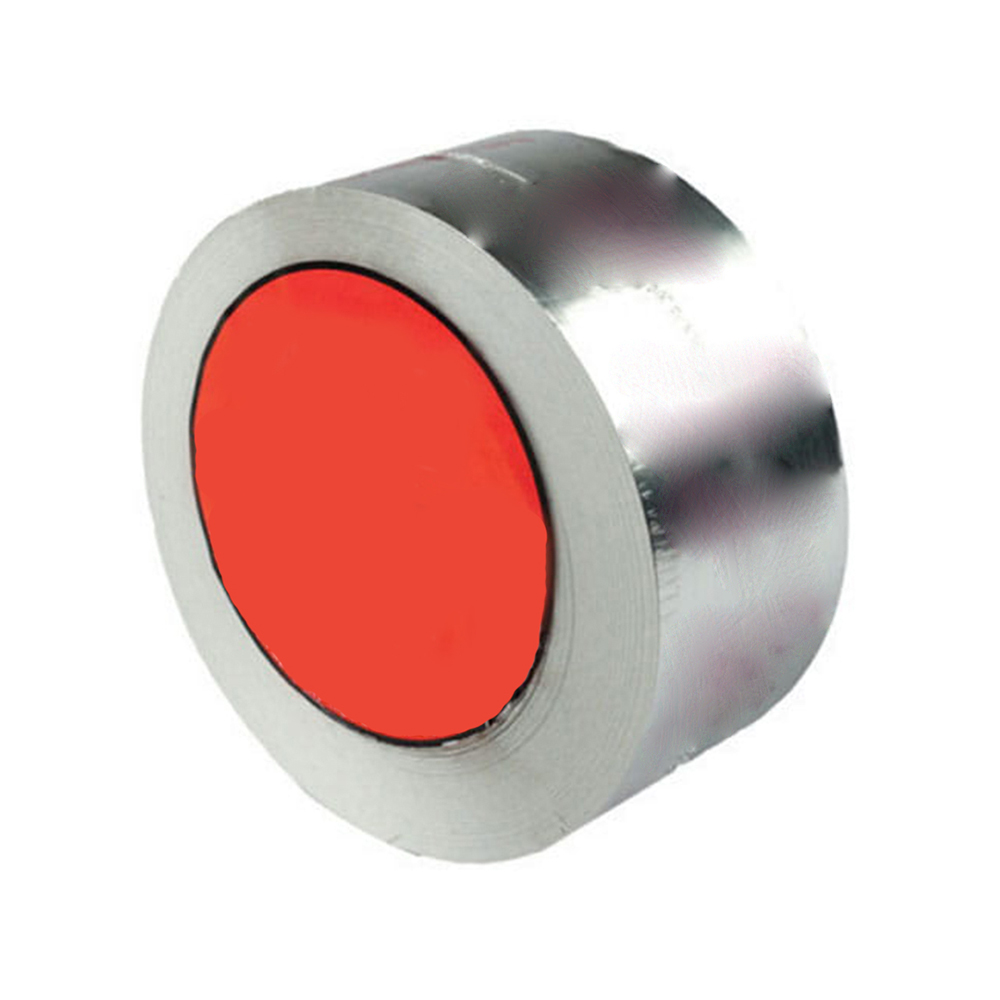
For a complete system, installation kits and accessories — end seals, power connection boxes, tee kits, and fixing tape — ensure the circuit is properly terminated and protected from day one.

 English
 русский
 Français
 Español
 عربى
عربى
