A single frozen pipe in an industrial facility can halt an entire production line. In oil and gas, chemical processing, and power generation — where pipework carries fluids that congeal, crystallize, or freeze well above ambient winter temperatures — trace heating is not optional safety equipment. It is a core component of process reliability.
What Is Pipework Trace Heating?
Pipework trace heating is a system of electrical heating cables installed along the external surface of pipes, vessels, valves, and instrumentation to compensate for heat lost to the surrounding environment. The cables run the length of the pipework — "tracing" its path — and generate heat that offsets thermal loss, keeping the pipe contents at or above a target temperature.
The operating principle is straightforward: every pipe loses heat to its surroundings whenever its contents are warmer than the ambient environment. Thermal insulation slows this loss but cannot eliminate it. Trace heating actively replaces the heat that insulation cannot retain, maintaining thermal balance continuously. The result is that fluids inside remain fluid, flow rates stay consistent, and process chemistry is not disrupted by temperature variation.
Electric trace heating has largely replaced steam tracing in new industrial installations because it offers more precise control, simpler installation, lower maintenance overhead, and the ability to monitor individual circuits remotely. International standards including IEEE 515, IEC 60208, and BS 6351 govern the design and installation of electric trace heating systems across hazardous and non-hazardous applications.
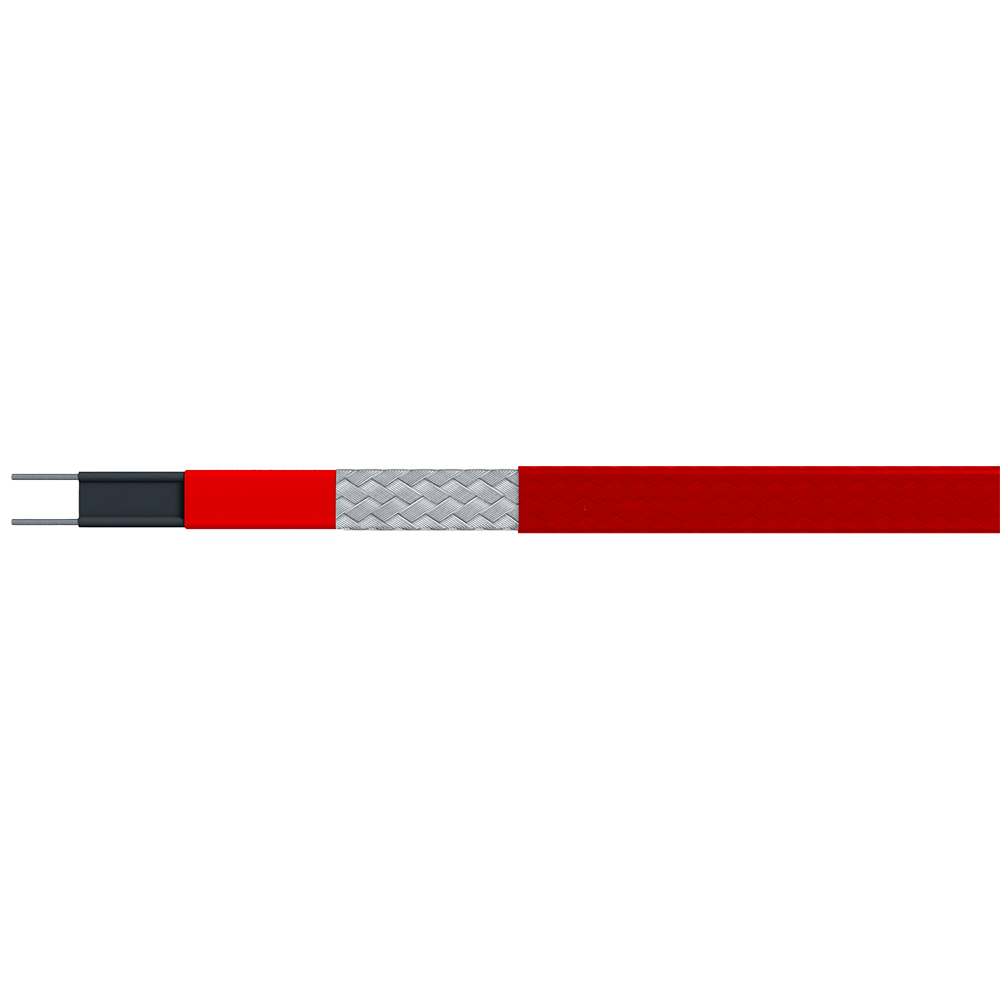
How a Trace Heating System Works
A complete pipework trace heating system consists of four main components working together: the heating cable, thermal insulation, the control system, and installation accessories.
The heating cable is secured directly to the pipe surface using aluminum tape, which improves thermal contact and distributes heat more evenly. The cable runs along the pipe — either straight for short runs, or spirally wrapped for higher heat output requirements. At valves, flanges, and pipe supports, additional cable is looped to compensate for the higher heat loss these fittings generate.
Over the cable and pipe, thermal insulation is applied — typically mineral wool, foam glass, or calcium silicate depending on operating temperature. The insulation layer dramatically reduces the heating load required by the cable. A well-insulated system may only need a fraction of the power that an uninsulated pipe would demand, making insulation selection as critical as cable selection to overall system efficiency.
The control system — a thermostat, controller, or in large installations a networked monitoring panel — determines when the cable energizes and de-energizes based on pipe or ambient temperature. Most systems activate when the monitored temperature drops below a set point (typically 3–5°C for freeze protection) and switch off when temperature recovers to a safe level. For process temperature maintenance, tighter control bands are used to keep fluids within precise viscosity or reactivity windows.
Installation accessories — end seals, power connection boxes, junction boxes, and tee connectors — complete the circuit and protect it from moisture ingress and mechanical damage.
Types of Heating Cable for Pipework Applications
Not all heating cables are suited to all pipe applications. The primary categories differ in how they generate and distribute heat along the circuit.
Self-regulating cables are the most widely specified type for pipework freeze protection and low-to-medium temperature maintenance. Their output automatically varies along the cable's length in response to local pipe temperature — producing more heat where the pipe is coldest and reducing output where it is warmer. This makes them inherently energy-efficient and safe against overheating. They can be cut to length on site, overlapped at valves, and used across variable ambient conditions without circuit redesign.
Constant wattage parallel cables deliver a fixed power output per unit length regardless of pipe temperature. They are well-suited to applications where a precise, consistent heat input is required along the entire circuit, or where long circuit lengths exceed the practical range of self-regulating cables. Because power output does not vary, constant wattage circuits require accurate thermostat control to avoid overheating.
Mineral-insulated (MI) cables are specified for high-temperature process maintenance — applications where maintain temperatures exceed 150°C, or where the pipe environment involves exposure to mechanical damage, corrosive chemicals, or radiation. MI cables use a metal sheath and magnesium oxide insulation, giving them tolerance to extreme conditions that polymer-jacketed cables cannot withstand.
Browse the full heat trace product range, including low-temperature trace heaters for temperature maintenance and high-temperature trace heaters for freeze protection in demanding environments.
Industrial Applications of Pipework Trace Heating
The range of pipework applications where trace heating is specified covers most major industrial sectors.
In oil and gas processing, crude oil, heavy fuel oil, wax-bearing hydrocarbons, and sulfur pipelines all require trace heating because their pour points or solidification temperatures are well above typical ambient conditions. A sulfur pipeline, for example, requires a maintain temperature of approximately 130°C — impossible to achieve without active heating on exposed pipework runs.
In chemical and petrochemical plants, process fluids ranging from viscous polymers to reactive intermediates must be kept within precise temperature windows. Heat loss outside these windows changes viscosity, reaction rates, or crystallization behavior — in worst cases causing complete blockage or hazardous decomposition.
Water and wastewater systems use trace heating for freeze protection on exposed mains, instrumentation lines, drain pipes, and fire suppression systems in unheated structures or outdoor environments. Even a 15-minute power outage during severe frost can allow critical instrumentation lines to freeze solid.
In food and beverage production, chocolate, fats, oils, and sugar solutions require temperature maintenance to remain pumpable. Pharmaceutical pipelines carrying active ingredients or solvents have similar requirements, often with tight temperature tolerances dictated by product stability.
Power generation facilities use trace heating extensively on fuel oil systems, cooling water lines, instrument impulse lines, and condensate return pipework — anywhere heat loss would affect turbine availability or safety system performance.
System Design Considerations
Effective pipework trace heating requires accurate heat loss calculation before cable selection. The key inputs are pipe size and material, fluid maintain temperature, minimum ambient temperature, wind speed exposure, and insulation type and thickness. Undersizing the heating cable leaves the system unable to maintain temperature during design-minimum conditions. Oversizing wastes energy and may damage temperature-sensitive pipe linings or coatings.
For hazardous area installations — classified zones where flammable gases or dusts may be present — cable selection must comply with ATEX or IECEx certification requirements, and the control equipment must similarly be rated for the zone. Trace heating in hazardous locations requires heat trace control cabinets certified for hazardous locations and appropriate cable jacket materials that are intrinsically safe or suitably protected.
Thermostats and controllers must be positioned to accurately reflect the temperature at the coldest point of the circuit — not an average. Sensor location errors are one of the most common causes of under-performance in installed systems. For large installations, networked monitoring systems provide circuit-level alarming and energy data, allowing maintenance teams to detect faults or degraded insulation before a process failure occurs.
Complete trace heater installation kits and accessories — including end seals, power connection boxes, and tee kits — ensure circuits are properly terminated and protected from the outset.
Maintenance and Long-Term Reliability
Trace heating systems are generally low-maintenance once correctly installed, but periodic inspection is essential to sustained performance. The most common failure modes are wet or damaged insulation (which increases heat loss and may cause cable to work beyond its rating), physical damage to the cable jacket, and failed end seals that allow moisture into the cable termination.
Annual electrical testing — measuring insulation resistance and current draw — identifies degraded circuits before they fail in service. Infrared thermography is increasingly used during seasonal commissioning to identify cold spots in pipework that indicate a circuit fault or missing insulation section.
For operations teams managing large trace heating installations, integration with industrial electric control systems enables centralized monitoring, automated alarming, and energy logging — reducing the manual inspection burden and providing documented evidence of system performance for regulatory and insurance purposes.

 English
 русский
 Français
 Español
 عربى
عربى
