Explosion Proof Immersion Heaters Are Essential Where Flammable Atmospheres and Liquid Heating Coexist
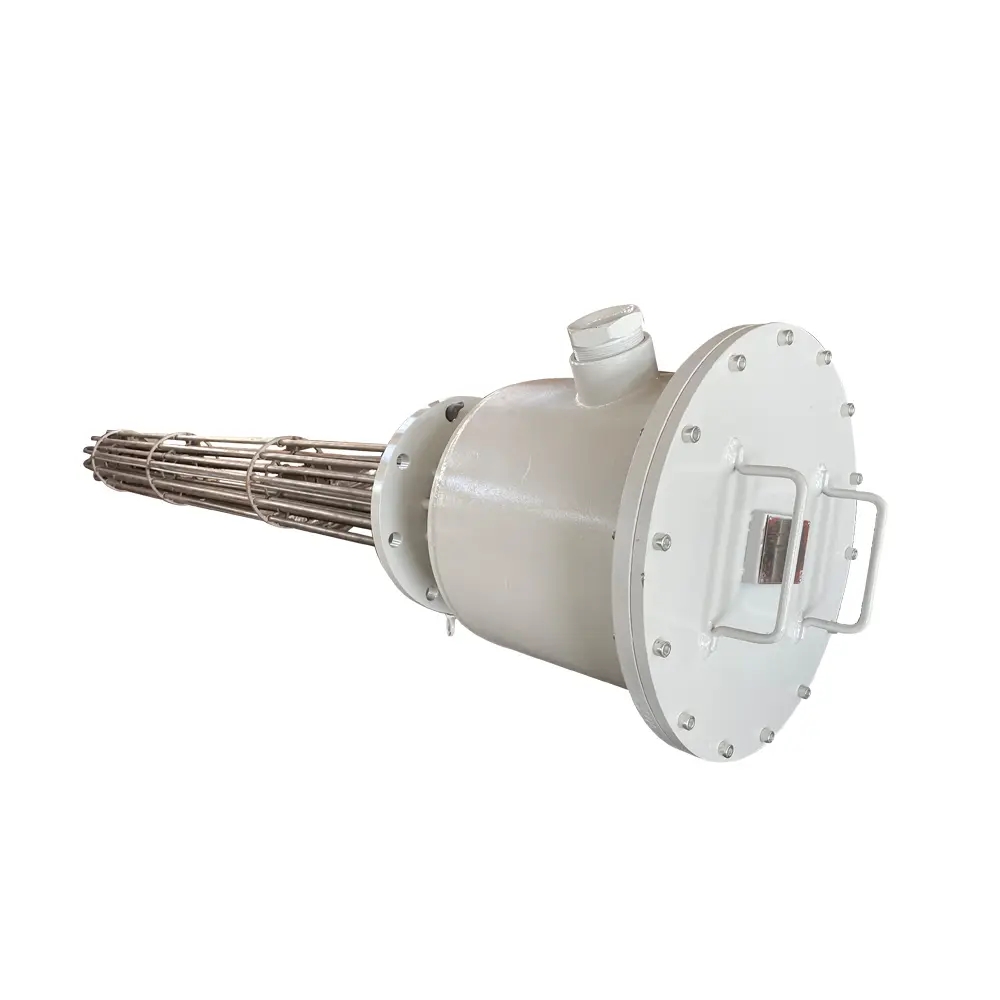
In any facility where flammable liquids, gases, or combustible dusts are present alongside a need for process heating, a standard immersion heater is not just inadequate — it is a direct ignition hazard. Explosion proof immersion heaters are specifically engineered to prevent internal electrical faults, overheating, or arcing from igniting the surrounding atmosphere, while still delivering the precise, efficient liquid heating that industrial processes require.
The right explosion proof immersion heater for a given application depends on the hazardous location classification, the fluid being heated, required watt density, sheath material, and termination enclosure rating. Getting any of these wrong creates either a safety risk or a unit that fails prematurely in service. This guide walks through every critical selection and installation consideration in practical terms.
How Explosion Proof Immersion Heaters Differ from Standard Units
A standard immersion heater heats fluid efficiently but its electrical termination enclosure — where wiring connects to the heating elements — is not sealed against explosive atmospheres. If an internal arc or spark occurs, it can ignite flammable vapors present in the surrounding environment.
Explosion proof immersion heaters address this through two complementary engineering approaches:
- Explosion proof (XP) enclosures: The terminal housing is constructed to contain any internal explosion and prevent flame propagation to the external atmosphere. The enclosure achieves this through machined flanged joints with precisely controlled gap dimensions and thread engagement depths that cool escaping gases below ignition temperature. These enclosures are cast from heavy-wall aluminum alloy or iron and are significantly heavier and more robust than standard terminal heads.
- Increased safety (Ex e) designs: Used in some European and IECEx certified units, these enclosures prevent arcs and sparks from occurring at all through elevated insulation requirements, creepage distances, and temperature controls — rather than containing an explosion after the fact.
Additionally, explosion proof immersion heaters incorporate over-temperature protection devices — typically thermal cutouts or thermostats rated for the hazardous location — to prevent surface temperatures from exceeding the T-class rating of the installation, which would risk igniting the surrounding atmosphere even without an internal fault.
Hazardous Location Classifications and Certification Requirements
Selecting a certified explosion proof immersion heater requires matching the unit's certification to the specific hazardous location classification of the installation. Using a heater certified for one classification in a different — and potentially more severe — hazardous area is a compliance violation and a safety failure.
North American Classification System (NEC / CEC)
The National Electrical Code (NEC) and Canadian Electrical Code (CEC) classify hazardous locations using a Class/Division system:
- Class I: Flammable gases or vapors (petroleum refineries, chemical plants, paint booths, fuel handling facilities)
- Class II: Combustible dusts (grain elevators, flour mills, coal handling, pharmaceutical powder processing)
- Class III: Ignitable fibers or flyings (textile mills, woodworking facilities)
- Division 1: Hazardous conditions exist under normal operations
- Division 2: Hazardous conditions occur only in abnormal situations (leaks, equipment failure)
The most demanding and common certification for North American immersion heaters is Class I, Division 1, Groups C and D — covering ethylene and propane/natural gas environments respectively. UL 1203 is the applicable standard for explosion proof enclosures in the US; CSA C22.2 No. 30 covers Canada.
IECEx and ATEX Classification (International / European)
The IEC 60079 series and ATEX Directive (2014/34/EU) use a Zone system rather than Class/Division:
- Zone 0 / Zone 20: Explosive atmosphere present continuously or for long periods (gases / dusts respectively) — requires Ex ia category
- Zone 1 / Zone 21: Likely to occur occasionally during normal operations — Ex d (flameproof) or Ex e (increased safety) immersion heaters are appropriate
- Zone 2 / Zone 22: Not likely under normal operations but possible — broader range of protection concepts permitted
Ex d IIB T4 Gb is a common ATEX marking for explosion proof immersion heaters in petroleum/chemical applications — indicating flameproof enclosure, Gas Group IIB (ethylene class), temperature class T4 (maximum surface temperature 135°C), and Equipment Protection Level Gb (Zone 1 suitable).
Temperature Class (T-Rating): The Most Critical Safety Parameter
The T-class (temperature class) of an explosion proof immersion heater defines the maximum surface temperature the heater can reach under any operating condition — including fault conditions. This temperature must remain below the auto-ignition temperature (AIT) of the flammable substance present in the installation environment.
| T-Class |
Max Surface Temp |
Example Substances Covered |
AIT of Substance |
| T1 |
450°C (842°F) |
Acetone, methane, ammonia |
> 450°C |
| T2 |
300°C (572°F) |
Ethanol, propane, butane |
> 300°C |
| T3 |
200°C (392°F) |
Diesel fuel, kerosene, turpentine |
> 200°C |
| T4 |
135°C (275°F) |
Ethylene, acetaldehyde |
> 135°C |
| T5 |
100°C (212°F) |
Carbon disulfide |
> 100°C |
| T6 |
85°C (185°F) |
Diethyl ether, ethyl nitrite |
> 85°C |
IEC/ATEX temperature classes with maximum surface temperatures and representative flammable substances requiring each rating
A higher T-class number indicates a more restrictive temperature limit and is required for substances with lower auto-ignition temperatures. A heater rated T3 is not suitable for an ethylene atmosphere (which requires T4 or better), even if it carries a valid explosion proof certification for all other parameters. Always obtain the AIT for every flammable substance present before specifying T-class.
Watt Density: The Central Engineering Parameter for Safe Element Design
Watt density — the amount of power dissipated per unit of element surface area, expressed in watts per square inch (W/in²) or watts per square centimeter (W/cm²) — is the single most important design parameter for preventing element overheating in immersion heaters. Excessive watt density causes element sheath temperatures to exceed safe limits, leading to fluid degradation, element burnout, and potential ignition in hazardous atmospheres regardless of the enclosure rating.
Recommended Watt Density Limits by Fluid Type
- Water and water-based solutions: Up to 60–80 W/in² — water's high thermal conductivity efficiently removes heat from the element surface
- Light oils and fuel oils (heating oil, diesel): 10–20 W/in² — petroleum fluids have significantly lower heat transfer coefficients and degrade or coke at elevated temperatures
- Heavy fuel oils, viscous oils, and tars: 5–10 W/in² — heavy petroleum products require very low watt density to prevent carbonization on the element sheath
- Caustic solutions (NaOH, KOH): 20–40 W/in² depending on concentration — caustics are thermally conductive but corrosive; Incoloy or titanium sheaths required
- Acids: 15–30 W/in² — sheath material selection is critical; always consult a corrosion compatibility chart
- Molten salts: 20–35 W/in² with careful temperature control — used in high-temperature thermal storage and heat treatment applications
For hazardous location applications, always apply watt density limits at or below the lower end of the range for the fluid type and incorporate a low-liquid-level cutout to prevent dry-fire conditions — an element exposed to air rather than fluid in a hazardous atmosphere can reach ignition-capable surface temperatures within seconds of energization.
Sheath Materials: Matching Chemistry to Application
The element sheath is the outer tube that contains the resistance wire and magnesium oxide (MgO) insulation. Sheath material selection determines both the corrosion resistance of the element in the process fluid and the maximum operating temperature of the assembly.
| Sheath Material |
Max Element Temp |
Compatible Fluids |
Avoid |
| 304 Stainless Steel |
870°C (1600°F) |
Water, mild solutions, oils |
Chloride-containing fluids, strong acids |
| 316 Stainless Steel |
870°C (1600°F) |
Seawater, mild chloride environments, caustics |
Strong HCl, oxidizing acids |
| Incoloy 800 / 840 |
980°C (1800°F) |
Caustics, sulfurous environments, deionized water |
Strong acids, halogenated compounds |
| Titanium |
315°C (600°F) in liquid |
Oxidizing acids (HNO₃), seawater, chlorides |
Reducing acids (HF, concentrated HCl), dry operation |
| Copper |
260°C (500°F) |
Clean water, plating solutions |
Acids, ammonia, most industrial chemicals |
| Fluoropolymer (PTFE) coated |
260°C (500°F) |
Acids, solvents, aggressive chemicals |
Above 260°C, abrasive fluids |
Explosion proof immersion heater sheath materials with temperature limits, compatible fluids, and incompatible environments
Typical Applications for Explosion Proof Immersion Heaters
Understanding the industries and specific process applications where explosion proof immersion heaters are standard equipment helps confirm whether a given installation requires XP certification and identifies the specific requirements likely to apply.
- Petroleum refining and storage: Heating crude oil, fuel oils, and residual fuels in storage tanks and process vessels. Class I, Division 1 or Zone 1 environments are standard throughout these facilities. Fuel oil viscosity reduction heating commonly requires 5–15 W/in² on Incoloy elements to prevent coking.
- Chemical process plants: Heating reaction vessels, storage tanks, and process pipes containing flammable organic solvents, ketones, and aromatic compounds. T4 or T3 class ratings are typical depending on the specific chemicals present.
- Paint and coating manufacturing: Maintaining temperature in solvent-based coating systems where vapors from thinners and solvents create Class I, Division 1 conditions in enclosed areas.
- Pharmaceutical manufacturing: Heating process solvents including ethanol, isopropanol, and acetone — all Class I substances — in reaction and extraction vessels requiring precise temperature control.
- Wastewater treatment with methane generation: Anaerobic digester heating requires Class I certification due to methane production. Stainless steel elements in flanged configurations are standard for digester sludge heating.
- Grain and flour processing: Class II, Division 1 environments from combustible dust require XP immersion heaters in any heating application within the facility, including water heating for cleaning systems.
- Offshore oil and gas platforms: Seawater heating, process fluid temperature maintenance, and winterization heating throughout the platform require both XP certification and marine-grade corrosion resistance.
Installation Requirements and Safety Controls for Hazardous Locations
An explosion proof immersion heater is only as safe as its installation. Several mandatory safety controls must accompany any XP heater installation to maintain certification compliance and prevent catastrophic failure.
Mandatory Protection Devices
- Low-liquid-level cutout: A level switch or probe that de-energizes the heater if the fluid level drops below the top of the heating elements. This is the single most critical safety device — an energized element exposed to vapor in a hazardous atmosphere is an immediate ignition risk. NEC Article 500 and IEC 60079-14 both require low-level protection for immersion heaters in Division 1 / Zone 1 applications.
- High-temperature cutout (thermal cutoff): A separate, independent over-temperature device — set above the operating thermostat but below the T-class limit — that permanently opens the circuit on over-temperature events. This must be a manual-reset type so that the cause of overheating is investigated before the heater is returned to service.
- Operating thermostat: Controls normal operating temperature. Must be rated for the hazardous location or located in a safe area with a temperature sensor in the hazardous area.
- Ground fault protection: Required for element integrity monitoring — a ground fault indicates element insulation breakdown that could cause arcing within the fluid or at the terminal connections.
Conduit and Wiring Requirements
All conduit entering the explosion proof terminal enclosure must be sealed with an approved XP conduit seal fitting (Crouse-Hinds EYS or equivalent) within 18 inches of the enclosure entry per NEC 501.15. Sealing compound prevents flammable vapors from traveling through the conduit system from the hazardous area to non-hazardous areas — a phenomenon called conduit breathing that can create unexpected ignition hazards remote from the heater itself.
Specifying an Explosion Proof Immersion Heater: A Practical Checklist
When requesting a quotation or specifying an explosion proof immersion heater, providing complete application data upfront prevents specification errors and delivery of an incorrect unit. The following information is required:
- Hazardous location classification: Class/Division/Group (NEC) or Zone/Gas Group (ATEX/IECEx), and the specific flammable substance(s) present
- Required T-class: Based on the auto-ignition temperature of the most ignition-sensitive substance present
- Fluid identity and properties: Chemical name, concentration, viscosity at operating temperature, specific heat, and any corrosive characteristics
- Operating and maximum fluid temperature: Both the target process temperature and the maximum safe temperature for the fluid
- Vessel dimensions and mounting configuration: Tank diameter, available immersion length, flange or threaded connection size, and orientation (horizontal, vertical, angled)
- Required kilowatt rating: Calculated from the heat-up load (mass × specific heat × temperature rise ÷ heat-up time) plus steady-state heat loss compensation
- Supply voltage and phase: Single-phase or three-phase, voltage level, and available amperage at the installation point
- Certification body preference: UL/CSA for North American applications, ATEX for European Union, IECEx for international/global acceptance

 English
 русский
 Français
 Español
 عربى
عربى
