Overview: Role of Electric Immersion Heaters in Renewable Energy Systems
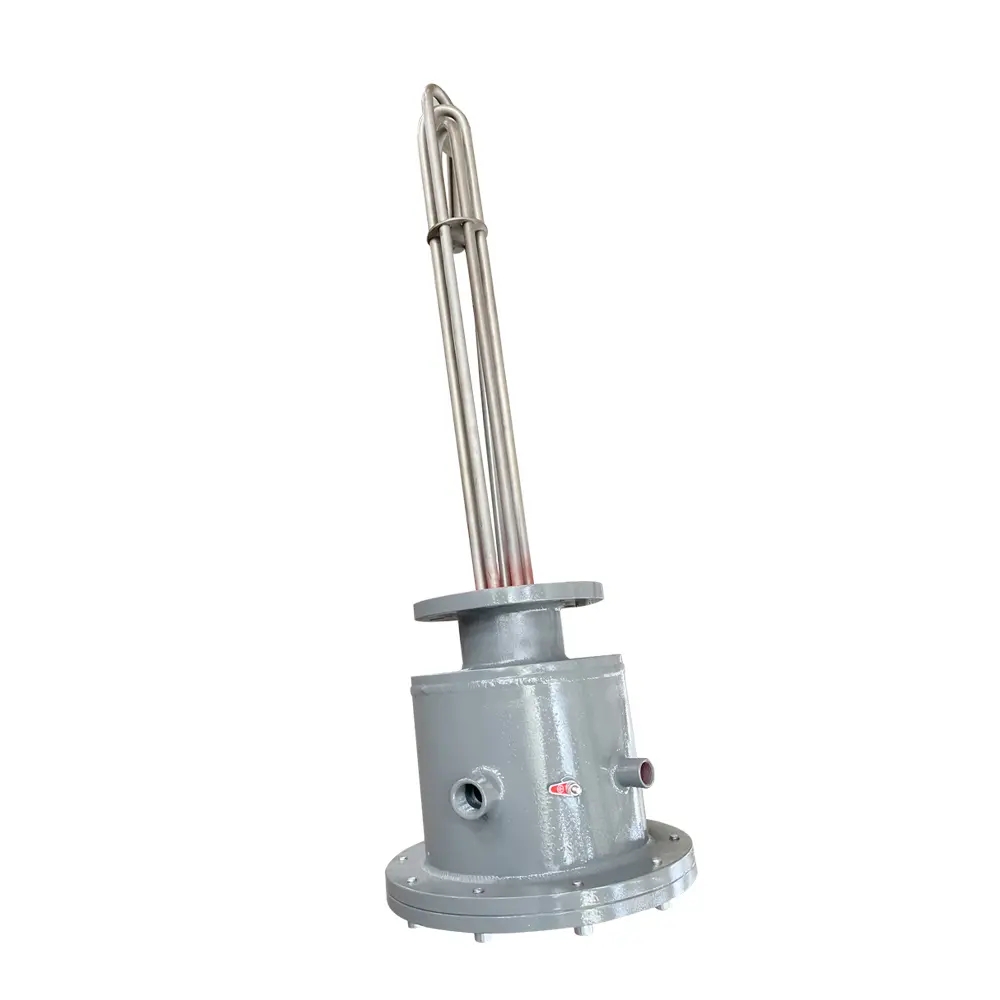
Electric immersion heaters (EIHs) are straightforward resistive devices that convert electrical energy into heat directly within a fluid or thermal medium. While simple in design, they are powerful enablers for integrating variable renewable energy (VRE) such as wind and solar into power systems. By converting surplus electricity into useful thermal energy on demand, EIHs reduce curtailment, provide flexible loads for grid balancing, and create inexpensive thermal storage that can decouple heat demand from electricity generation times.
How EIHs Enable Grid Flexibility
Absorbing Renewable Surplus
When wind or solar generation exceeds immediate electrical demand, grids traditionally curtail production or export it at low value. EIHs can be dispatched to absorb this surplus by heating water, oils, or phase-change materials. Large-scale immersion heaters connected to tanks or thermal banks act as controllable sinks that convert intermittent electricity into stored thermal energy with high round-trip efficiency and minimal complexity.
Demand Response and Ancillary Services
EIHs are suitable for automated demand-response programs. Aggregated across many sites, they provide fast, reliable load modulation to help balance frequency and manage short-term imbalances. By responding to price signals or direct grid operator commands, immersion heaters can provide ancillary services such as reserve capacity and ramp-rate smoothing without major infrastructure changes.
Applications: Where Immersion Heaters Deliver Value
Domestic and Commercial Hot Water Storage
In homes and commercial buildings, EIHs paired with insulated hot-water tanks act as low-cost thermal batteries. During periods of high renewable output or low electricity prices, heaters raise tank temperatures; stored hot water is used later for space heating, sanitary needs, or process hot water. This time-shifting reduces peak electrical demand and lowers energy bills while increasing renewable utilization.
Industrial Process Heat and Thermal Stores
Industry often requires low-to-medium temperature heat, which immersion heaters supply efficiently. Integrated with thermal stores, EIHs allow factories to run energy-intensive heating when renewable supply is abundant. Industries such as food processing, textiles, and chemical pre-heating can thus match operations to renewable availability, cutting fossil fuel reliance and operational costs.
District Heating and Community Energy
District heating systems can use large immersion-heated water tanks as seasonal or diurnal storage to capture renewable electricity. Community-scale thermal banks reduce the need for gas-fired peak boilers, offer resilience against power price spikes, and facilitate the integration of local wind and solar resources into heating networks.
Technical Considerations for Effective Integration
Control Strategy and Communication
Smart control is critical: EIHs should be networked to receive price or grid signals, prioritize thermal demand, and avoid unnecessary cycling. Simple algorithms that use weather forecasts, renewable production predictions, and occupancy patterns optimize when heaters run. Open communications (e.g., Modbus, MQTT) allow aggregators to manage fleets of EIHs as virtual power plants.
Thermal Storage Sizing and Heat Quality
Sizing storage to match expected surplus events is essential. Designers must consider temperature stratification, heat losses, and required outlet temperatures for end uses. Using appropriate storage mediums—water for low-temperature needs, thermal oils or phase-change materials for higher temperatures—maximizes value and efficiency.
Safety, Standards, and Lifecycle
Proper engineering addresses scaling, corrosion, and electrical safety. Immersion heaters must comply with local electrical standards, and maintenance regimes should prevent element fouling. Considering lifecycle emissions and recyclability of heater components ensures that the overall environmental benefit of coupling EIHs with renewables is preserved.
Comparing Heat Electrification Options
| Technology |
Ideal Use |
Round-Trip Efficiency |
Notes |
| Electric Immersion Heater |
Direct heat, thermal storage |
~95–99% |
Simple, low-cost, ideal for thermal batteries |
| Heat Pump |
Space heating, high COP needs |
200–400% (COP 2–4) |
Efficient but needs steady operation and higher CAPEX |
| Electric Boiler |
Steam/process heat |
~95–98% |
Similar to immersion for bulk heat, accessory equipment differs |
Best Practices and Implementation Steps
- Assess local renewable profiles and identify predictable surplus windows to size thermal storage accordingly.
- Integrate smart controls that can follow real-time grid signals and electricity price signals for automated dispatch.
- Design storage with stratification and insulation to minimize losses and maintain required outlet temperatures.
- Combine EIHs with other flexibility measures—demand-side management, battery storage, or heat pumps—to optimize economics.
- Implement pilot projects at commercial or district scale to validate controls, customer acceptance, and business models.
Conclusion: Practical Path to Decarbonization
Electric immersion heaters represent a pragmatic, low-cost technology to accelerate renewable integration. Their high conversion efficiency, simple installation, and compatibility with thermal storage make them particularly effective at absorbing variable generation and providing grid services. When combined with smart controls, proper sizing, and supportive market signals, EIHs help decouple thermal demand from real-time electricity supply—reducing curtailment, lowering emissions, and improving the economics of renewable projects. For utilities, industrial site managers, and building operators seeking practical decarbonization steps, immersion-heated thermal storage is an immediately implementable and impactful solution.

 English
 русский
 Français
 Español
 عربى
عربى
