What Does an Explosion Proof Rating Actually Mean?
A refinery worker once described explosion proof equipment this way: "It's not built to survive a bomb—it's built so it never becomes one." That distinction matters enormously when specifying industrial heaters for hazardous environments.
An explosion proof rating is a formal certification confirming that electrical equipment has been engineered to operate safely where flammable gases, vapors, or combustible dusts may be present. The design logic is containment, not prevention: if an internal arc or spark occurs inside the equipment, the enclosure is strong enough to contain that ignition and cool any escaping gases before they can ignite the surrounding atmosphere.
For electric heaters specifically, this matters more than for almost any other device. A heater's surface temperature and its junction box are two permanent ignition risks. Explosion proof ratings set enforceable limits on both—and certifying bodies verify those limits through independent testing before any unit reaches a hazardous location.
Three major certification systems govern this space: NEC (used primarily in the United States), ATEX (mandatory across the European Union), and IECEx (an internationally recognized scheme). Each uses different terminology, but all share the same engineering goal.
The NEC Classification System: Classes, Divisions, and Groups
The National Electrical Code, published by the NFPA under NFPA 70, is the primary hazardous location standard in North America. It organizes hazardous areas along four dimensions:
Class defines the type of hazardous material present. Class I covers flammable gases and vapors—the most relevant category for oil and gas facilities using electric immersion heaters. Class II covers combustible dusts, common in grain handling or chemical powder processing. Class III applies to ignitable fibers.
Division describes how frequently the hazardous substance is present. Division 1 means the material is present continuously or under normal operating conditions. Division 2 means it is only present during abnormal situations such as equipment failure or accidental release. A heater installed inside a sealed petroleum storage tank would typically fall under Class I, Division 1—the most demanding rating level.
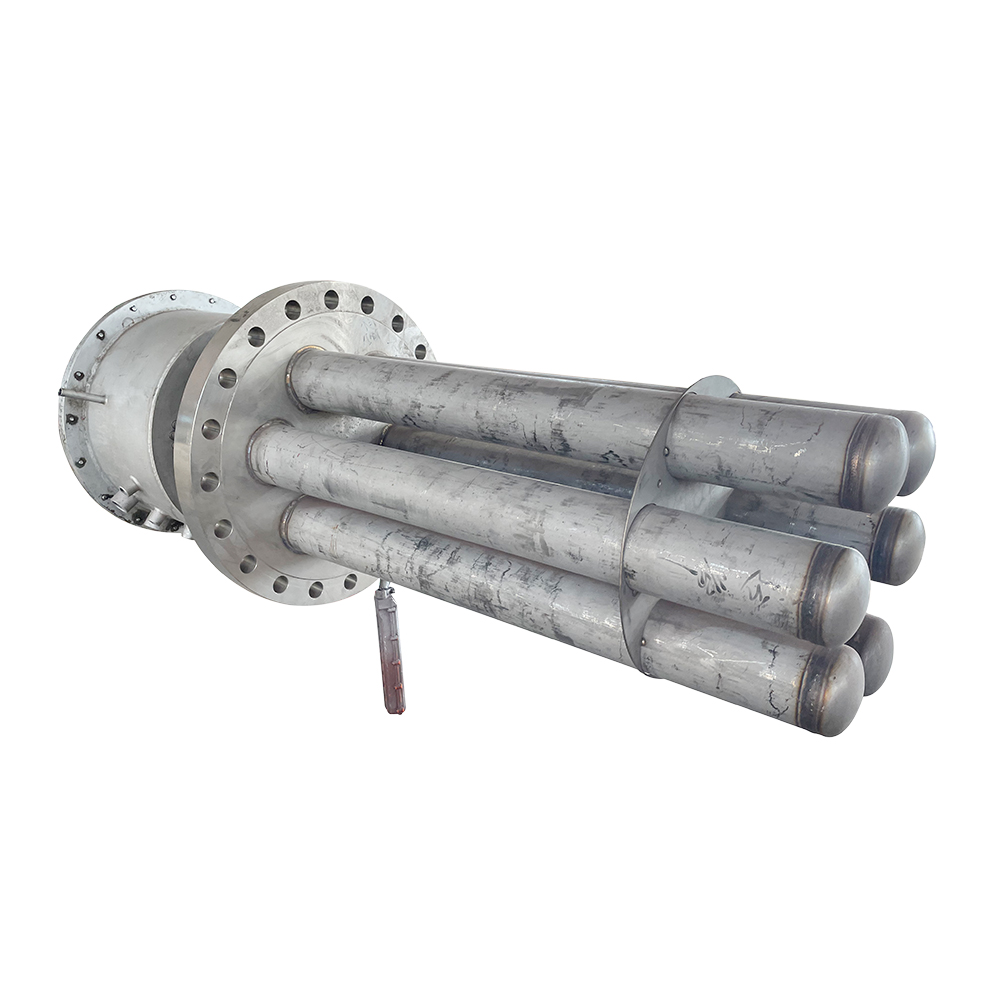
Group identifies the specific gas or dust involved. Gas groups run from A (acetylene, highest ignition risk) through D (propane, methane). The group determines critical design parameters such as maximum experimental safe gap—the tightest clearance through which a flame cannot propagate. explosion-proof immersion heaters for hazardous liquid applications are typically rated for Groups C and D, covering the most common petroleum and chemical vapors.
Temperature Class (T-Code) caps the maximum surface temperature the equipment can reach. T1 allows up to 450 °C; T6 caps at 85 °C. The selected T-Code must sit below the auto-ignition temperature of every hazardous substance present. For heaters—devices that exist specifically to generate heat—the T-Code is one of the most critical selection criteria and is discussed further in its own section below.
UL listing under NEC standards is the dominant certification pathway in North America. A typical heater nameplate might read: Class I, Division 1, Groups C, D; T3—communicating the entire hazard profile in a compact string.
ATEX Ratings: How Europe Classifies Hazardous Zones
ATEX—from the French ATmosphères EXplosibles—is the EU's mandatory framework for equipment used in explosive atmospheres. Where NEC uses Classes and Divisions, ATEX uses Zones, and the frequency logic is similar but the terminology is distinct.
Gas zones: Zone 0 describes an area where a flammable atmosphere is present continuously or for long periods. Zone 1 means it is likely during normal operations. Zone 2 covers abnormal-condition-only scenarios. Dust follows the same pattern with Zone 20, 21, and 22 respectively.
Equipment Category maps directly onto zone requirements: Category 1 equipment is certified for Zone 0 (or 20), Category 2 for Zone 1 (or 21), and Category 3 for Zone 2 (or 22). Higher category numbers mean progressively less stringent protection requirements.
Protection Method (Ex Code) tells buyers exactly how the equipment prevents ignition. The most common method for industrial heaters is Ex d—flameproof enclosure, meaning the junction box is built to contain any internal explosion and cool escaping gases below the ignition threshold. Ex e (increased safety) reduces the likelihood of sparks through enhanced terminal design and clearances. Some heater control assemblies combine both: Ex de.
An ATEX-compliant explosion-proof process heaters for high-temperature industrial pipelines will carry a marking such as II 2 G Ex d IIB T4 Gb. Reading left to right: above-ground industry (II), Category 2, gas atmosphere (G), flameproof enclosure (Ex d), gas group IIB (includes ethylene), temperature class T4 (max 135 °C surface), Equipment Protection Level Gb.
ATEX certification is issued by EU Notified Bodies—accredited third-party labs that conduct conformity assessment. Manufacturers bear legal responsibility for compliance; the Notified Body verifies it.
IECEx and Global Certification: Bridging the Gap
ATEX applies within the EU. NEC applies in the United States. A heater manufacturer selling across both markets—plus Australia, the Gulf states, and Southeast Asia—faces a patchwork of overlapping requirements. IECEx exists to reduce exactly this friction.
Administered by the International Electrotechnical Commission, IECEx uses the same zone-based classification as ATEX and aligns closely with the IEC 60079 standard series. Equipment certified under IECEx carries an "Ex" mark and is recognized by member countries including Australia, South Africa, and much of the Middle East. The global framework for hazardous area electrical equipment is gradually converging toward IEC 60079 as world trade becomes more interconnected.
For Chinese manufacturers exporting to Europe, the practical workflow typically requires both ATEX and IECEx certification. ATEX satisfies the EU's legal directive; IECEx satisfies the additional country-specific requirements of export markets. In practice, because the technical standards are aligned, a single design and test program can support both marks simultaneously—reducing cost and time to market.
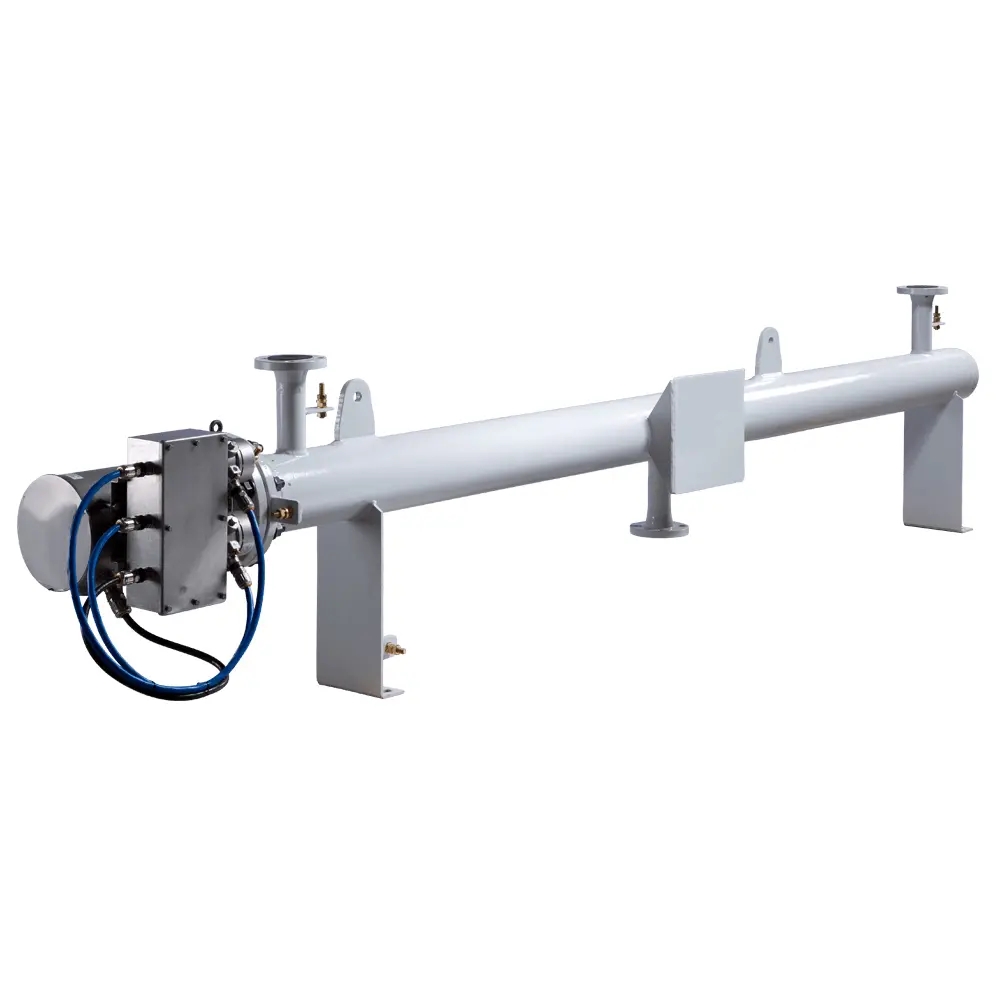
The multiple-sealing explosion-proof control cabinets paired with industrial heaters often carry dual ATEX/IECEx markings for exactly this reason—giving facility operators in any region a single compliant package.
Temperature Classes (T-Codes): The Overlooked Critical Factor
Most engineers focus immediately on Class, Division, or Zone when specifying explosion proof equipment. Temperature class receives less attention—yet for electric heaters, it is arguably the single most consequential parameter.
Every flammable substance has an auto-ignition temperature: the point at which it ignites without an external flame or spark. Hydrogen auto-ignites at approximately 500 °C. Propane ignites around 470 °C. Some heavier petroleum fractions ignite below 200 °C. If a heater's surface ever reaches the auto-ignition temperature of the surrounding gas, it becomes an ignition source—regardless of how robust its enclosure is.
The six temperature classes set maximum allowable surface temperatures:
IEC/NEC Temperature Classes for Explosion Proof Equipment
| T-Code |
Max Surface Temperature |
Typical Application |
| T1 |
450 °C |
High-ignition-point gases (e.g. methane) |
| T2 |
300 °C |
General hydrocarbon vapors |
| T3 |
200 °C |
Most petroleum applications |
| T4 |
135 °C |
Acetaldehyde, ethyl ether |
| T5 |
100 °C |
Carbon disulfide environments |
| T6 |
85 °C |
Diethyl ether, low-ignition substances |
An immersion heater rated T3 in a tank containing a T4-class substance is operating outside its certification—a compliance gap that inspections routinely uncover. Always verify the auto-ignition temperature of the process fluid before finalizing T-Code selection. This point is covered in depth in our technical guide to the structure and installation of explosion-proof electric heaters.
Note that T-Code refers to the external surface of the equipment under maximum rated conditions—not the element sheath temperature or the process fluid temperature. For high-watt-density heaters, the difference between internal element temperature and external enclosure temperature can be significant, and responsible manufacturers test at full rated load.
How to Select the Right Explosion Proof Rating for Industrial Heaters
Translating certification knowledge into a correct purchase comes down to four sequential steps. Skipping any one of them introduces risk.
- Identify the hazardous substance and its properties. What gas, vapor, or dust is present? What is its auto-ignition temperature, flash point, and NEC Group or IECEx gas group? This data comes from the process safety documentation or the material's safety data sheet.
- Classify the area. How often is the hazardous atmosphere present? Work with a process safety engineer to determine whether the installation qualifies as Division 1/2 (NEC) or Zone 0/1/2 (ATEX/IECEx). The answer drives which category or division of equipment is legally required.
- Match the certification standard to your market. North American projects need UL listing under NEC. European projects require ATEX. International projects—particularly in oil and gas—increasingly require IECEx, sometimes alongside ATEX. Confirm which marks your facility insurance, local authority, and export documentation require before ordering.
- Verify T-Code against auto-ignition temperature. The heater's T-Code must be lower than the auto-ignition temperature of the hazardous substance. Build in margin: if the auto-ignition temperature is 200 °C, T3 (max 200 °C) is technically compliant but T4 (max 135 °C) is a safer specification for real-world installation tolerances.
For facilities handling multiple process fluids—common in chemical plants and offshore platforms—the most stringent combination of substance, zone, and T-Code governs the entire area. All equipment installed there, including immersion heaters certified for hazardous area use, must comply with the tightest applicable rating, not an average.
Finally, certification is not a one-time event. Explosion proof ratings are tied to the equipment's design, materials, and manufacturing process. Field modifications—including changing terminal connections, adding instrumentation, or altering watt density—can void a certification. Maintenance procedures must preserve the original rated condition, and regular inspection intervals should follow the protection method's documented requirements.
The rating on the nameplate is only as good as the installation and maintenance that surrounds it. In hazardous locations, that is not a formality—it is the difference between an incident and an ordinary workday.

 English
 русский
 Français
 Español
 عربى
عربى
