A 45 kW immersion heater arrives on site with a plate reading II 2G Ex db IIC T4 Gb. The solvent tank it heats sits in Zone 1 of a recovery unit. Everything lines up and the installation passes review. Replace that heater with a cheaper flange model carrying no Ex marking and the same tank becomes an ignition source, however well the element itself is built.
Hazardous area certification decides whether equipment may be installed at all. The checks are predictable: zone, gas or dust group, temperature class, protection level, and a valid certificate behind each of them.
What Hazardous Area Certification Actually Confirms
Certification is a conformity assessment, not a quality grade. An approved certification body tests one equipment design against the IEC 60079 series, audits the manufacturer's quality system, and issues a certificate naming the exact variants covered. What you receive is a statement about where the equipment may be used: zone, gas or dust group, temperature class, ambient range. It says little about whether the heater will still be running in ten years.
A certificate is also not transferable. Changing the power rating, the terminal box or the sheath material can push a variant outside the original scope. And the marking plate, not the brochure, is the legal interface; inspectors read it at commissioning and again at every audit.
The Certification Routes You Meet in a Tender
ATEX in the European Union
ATEX is the EU legal framework, implemented for equipment through Directive 2014/34/EU. It splits products into Group I (mining) and Group II (surface industry) and into Categories 1, 2 and 3 by protection level. A notified body issues the EU type examination, the manufacturer signs the Declaration of Conformity, and the product carries CE marking with the notified body number.
IECEx as the International Route
IECEx operates through the Certified Equipment Scheme. An ExCB issues a test report and certificate, and the manufacturer holds a quality assessment report for the production site. It has no direct legal force in most countries, but certificates are searchable in a public database, which makes them quick to verify and widely accepted as technical evidence.
North America and the United Kingdom
North America uses Class and Division marking under the NEC, or the Zone system in Articles 505 and 506, with listing by a nationally recognized testing laboratory. The UK runs a parallel route through UK Approved Bodies. None of these schemes substitutes for another: a heater certified only to ATEX still needs assessment before installation in Texas or on a UKCA site.
Zones, Categories and Equipment Protection Levels
The zone is determined by the site, not by the equipment vendor. The equipment must then offer at least the protection level that zone demands.
Gas and dust zone definitions with the minimum equipment category and protection level normally required.
| Atmosphere |
Zone |
Equipment category |
Protection level |
Typical release |
| Gas or vapour |
Zone 0 |
1G |
Ga |
Continuous or long periods |
| Gas or vapour |
Zone 1 |
2G |
Gb |
Likely during normal operation |
| Gas or vapour |
Zone 2 |
3G |
Gc |
Unlikely and short-lived |
| Dust |
Zone 20 |
1D |
Da |
Continuous or long periods |
| Dust |
Zone 21 |
2D |
Db |
Likely during normal operation |
| Dust |
Zone 22 |
3D |
Dc |
Unlikely and short-lived |
Where a plant has both Zone 1 and Zone 2 areas, standardising on 2G equipment for both is often cheaper overall than maintaining two spares packages, two wiring practices and two sets of drawings.
Reading a Marking Plate Without Guessing
Take the plate from the opening example: II 2G Ex db IIC T4 Gb, ambient -20 °C to +60 °C, followed by the certificate number. Each element answers a question.
- II: surface industry equipment group.
- 2G: Category 2, gas atmosphere.
- Ex db: flameproof enclosure, a concept that contains an internal explosion.
- IIC: the gas group covering hydrogen and acetylene, the most demanding of the three.
- T4: maximum surface temperature 135 °C, which must stay below the auto-ignition temperature of the process gas.
- Gb: protection level matching Zone 1.
Temperature class limits run from T1 at 450 °C down to T6 at 85 °C. A T4 heater in a fluid with an auto-ignition temperature of 180 °C leaves little margin once process temperature and dust layers are added, and that is where many specification mistakes begin.
Where Certification Decides Heater Selection
Inside a tank, the protection concept is only half the decision. Flange immersion heaters suit larger vessels needing several kilowatts and a wide heating surface; screw plug types fit smaller nozzles and simpler maintenance schedules. Sheath material, watt density on the element surface and the fluid group all feed into the temperature class calculation.
A practical example is a 6 kW, 380 V flange-connected immersion heater certified to ATEX for Zone 1 and 2 duty. Its rating suits small to medium tanks where the fluid must stay below a T4 or T3 limit, and the certificate scope covers the terminal enclosure as well as the element. Buyers comparing a wider explosion proof immersion heater range should confirm variant coverage before assuming any catalogue number is certified.
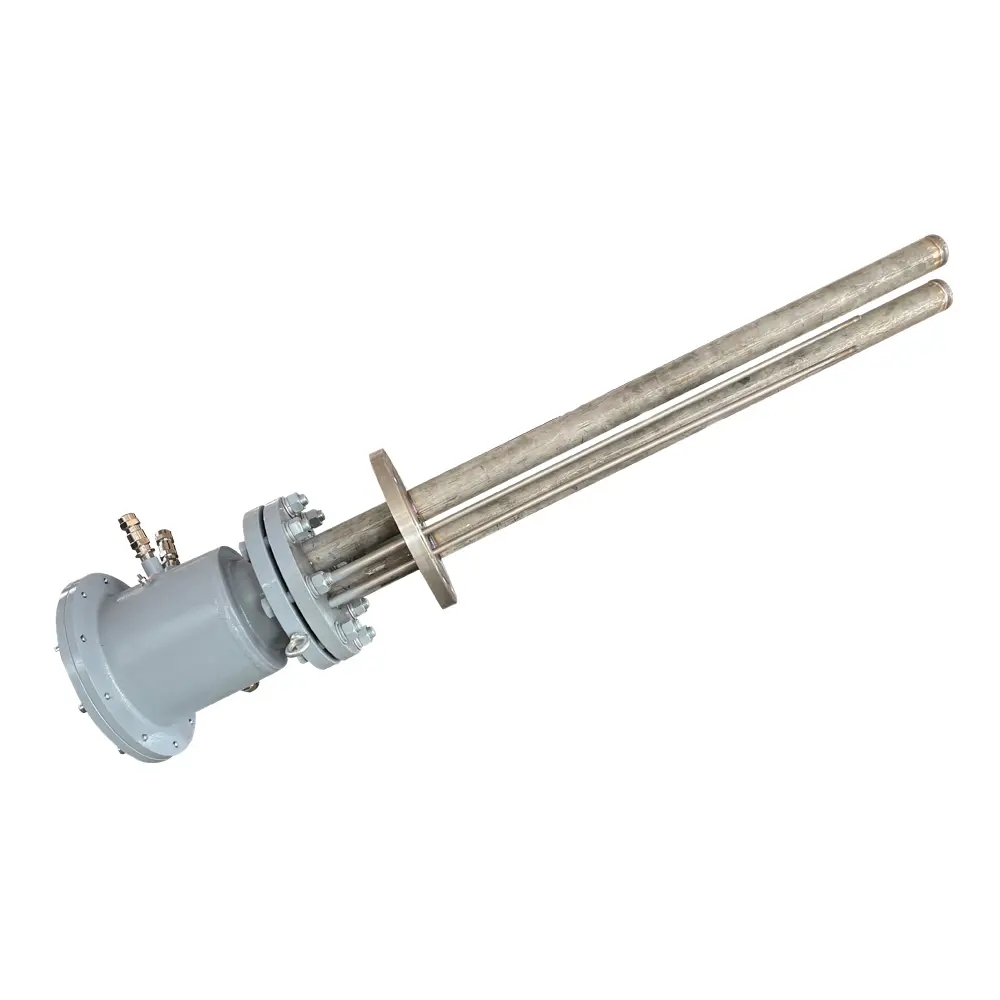 380V 6kW ATEX Explosion Proof Immersion HeaterATEX/IECEx-certified 6 kW 380 V flange immersion heater for Zone 1 and 2 tanks, with terminal enclosure certification and hazardous-area compliance details.View Product →
Controls and Heat Trace Sit Inside the Same Boundary
A certified heater powered from an uncertified control panel fails inspection as quickly as an uncertified heater. Cabinets for zoned areas carry their own protection concept, certificate and marking, and the cable entries, glands and breathers must match it, because an uncertified gland voids the enclosure rating.
The same applies to trace heating. A hazardous location trace control cabinet combines temperature control, monitoring and alarm functions inside an enclosure approved for the zone it serves, keeping the power supply, sensing circuit and alarm contacts within one certified boundary.
Installation practice matters too. Guidance on the structure, installation and operation of explosion proof electric heaters shows how enclosure orientation and cable routing affect compliance at commissioning.
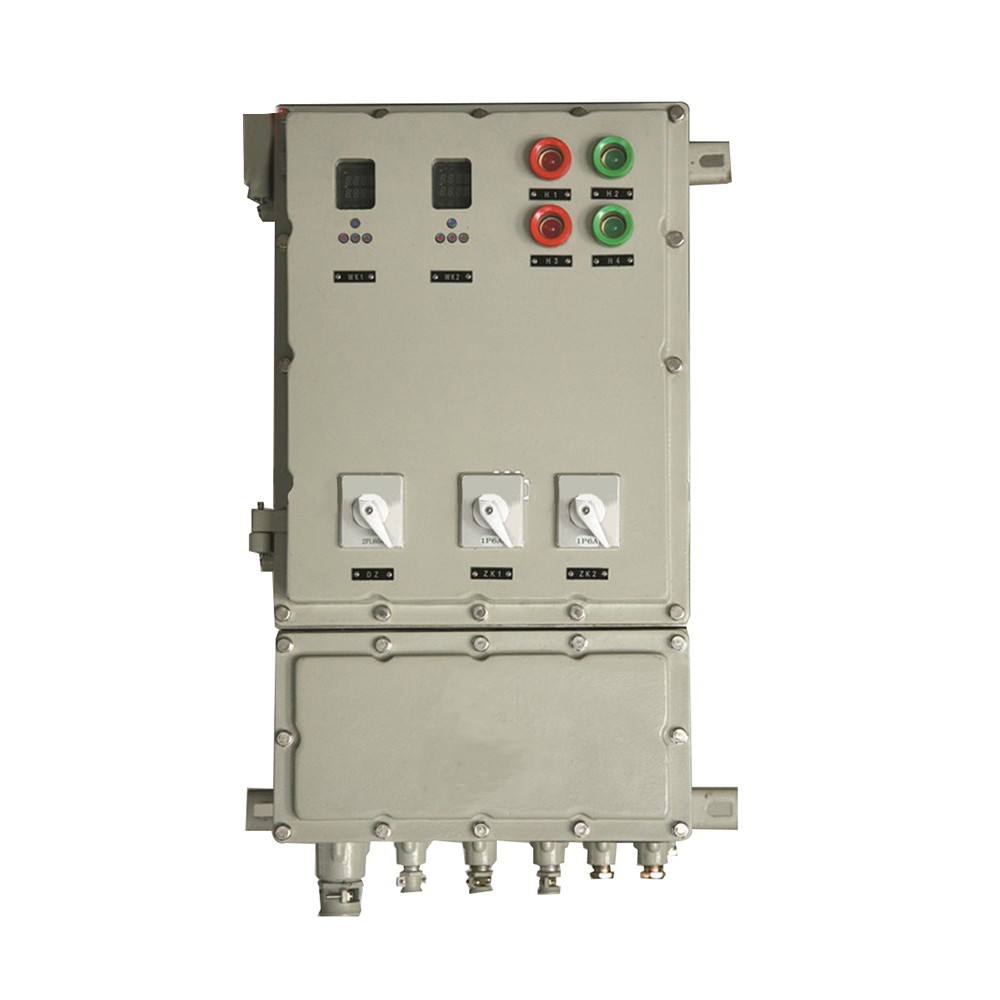 Flameproof Control Cabinet for Industrial Electric HeatersCast aluminum or welded steel enclosure with sealed cable entries and control components, suited to hazardous-area heater installations where certification and commissioning details matter.View Product →
 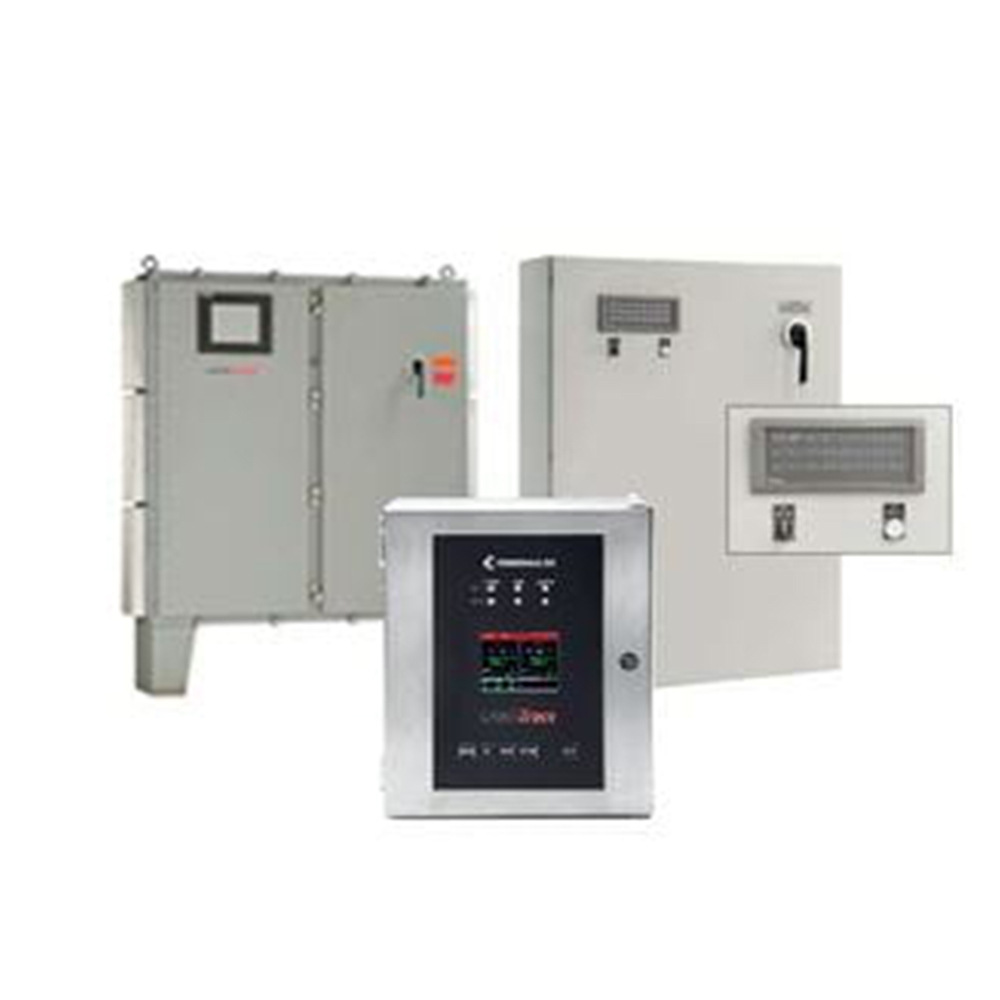 Heat Tracing Control Cabinet for Hazardous LocationsControls and monitors electrical heat tracing with temperature and power management, supporting 1–72 circuits for freeze protection and process temperature maintenance in demanding sites.View Product →
Procurement Risks That Surface After Delivery
Most certification problems are administrative rather than technical, and they appear once the crate is open.
- The certificate covers 380 V/6 kW, but the order was placed for 480 V/9 kW.
- The certificate is valid while the manufacturer's quality assessment report has lapsed.
- The marking plate omits the ambient range or the gas group.
- Glands, junction boxes or thermowells on the same skid were bought without Ex certification.
- Replacement elements are ordered later from a drawing that no longer matches the certified variant.
A Short Pre-Order Checklist
- Confirm the zone and the gas, vapour or dust group from the area classification drawing.
- Fix the required category and protection level, then the temperature class.
- Ask for the certificate number and verify it in the issuing scheme's public database.
- Check that the quoted variant, including voltage, wattage, material and enclosure, sits inside the certificate scope.
- Confirm the manufacturer holds a current quality assessment for the production site.
- Match every accessory on the same installation to the same zone.
Certification is easiest to handle at the specification stage, when the zone drawing, the fluid data and the certificate scope sit on one table. Once equipment is on site, every gap turns into a variation order, a delay or a shutdown. Checking the marking before the order costs an afternoon; correcting it afterwards costs a project.

 English
 русский
 Français
 Español
 عربى
عربى
