Suppose you are specifying an electric immersion heater for a waste-oil tank in a petrochemical plant. The tank sits in a classified area, so the heater, its junction box, and its temperature transmitter all need a certified method of protection. The instrument vendor offers an intrinsically safe transmitter. The heating equipment manufacturer offers an explosion-proof flange heater. Both approaches prevent ignition, but they operate on completely different principles, and that difference drives power capability, installation cost, and maintenance rules.
The Core Difference: Energy Limitation vs. Containment
An intrinsically safe device is designed so that it cannot release enough electrical or thermal energy to ignite the surrounding atmosphere. An explosion-proof device is designed to contain an internal explosion without letting flames or hot gases escape. In short, intrinsic safety is a prevention strategy, while explosion-proof protection is a containment strategy.
That distinction explains a common puzzle in the field: the temperature transmitter can be intrinsically safe, but the heater drawing several kilowatts cannot. High-power equipment cannot be made intrinsically safe, because both normal operation and credible fault conditions produce energy levels above the ignition threshold of typical fuel-air mixtures.
Terminology varies by region and standard. In North American practice, the term explosion-proof is widely used, while international standards call the same technique flameproof, designated Ex d. Similarly, intrinsic safety is designated Ex i. Knowing both names helps when comparing ATEX and IECEx certificates against local approvals.
How Intrinsically Safe Equipment Works
Intrinsic safety limits electrical energy at the source. In an Ex i circuit, voltage, current, and stored energy are held below the levels required to ignite the specific gas or vapor present. Safety barriers mounted in the safe area restrict the circuit with current-limiting resistors and voltage-clamping components. Even under a short circuit, a broken wire, or an accidental ground, the energy reaching the hazardous area remains below the ignition threshold.
Typical intrinsically safe devices are low-power instruments: temperature transmitters, pressure transmitters, level switches, solenoid valves, and communication devices. Their advantages are practical as well as technical:
- They can be approved for Zone 0, where an explosive atmosphere is present continuously or for long periods.
- Enclosures are compact and lightweight, because no heavy flameproof housing is needed.
- With barriers intact, trained personnel can open and service a device without de-energizing the circuit.
- Ordinary wiring methods apply on the safe-area side of the barrier, reducing installation cost.
The limiting factor is power. An intrinsically safe circuit typically delivers only a few hundred milliwatts, which is enough for a signal but not for a heater, motor starter, or lighting fixture.
How Explosion-Proof Equipment Works
Explosion-proof equipment, also called flameproof or Ex d, takes the opposite approach. Instead of limiting energy, it uses an enclosure strong enough to withstand an internal explosion. If flammable gas enters the housing and ignites, the enclosure contains the pressure and quenches the flame, so the explosion cannot propagate to the outside atmosphere.
Containment relies on precision-engineered flame paths. Machined joints and narrow gaps cool the escaping gases below the ignition temperature of the surrounding atmosphere before they leave the enclosure. The housing must also resist deformation under peak explosion pressure. This approach works regardless of the energy stored in the equipment, which is why it suits high-power devices. For a closer look at how these enclosures are designed and maintained, the article on the structure, installation, and operation of explosion-proof electric heaters is a useful reference.
Common explosion-proof products in industrial heating include:
- Flange immersion heaters and screw-plug heaters for storage tanks
- Air duct heaters and process heaters
- Control cabinets and motor starters
- Junction boxes, lighting fixtures, and heat trace control panels
The trade-offs are weight, cost, and access. Explosion-proof housings are heavy and built to tight tolerances, which raises manufacturing and shipping costs. The system must normally be de-energized and the area checked for gas before the enclosure is opened. For equipment that needs real power in a classified area, however, explosion-proof construction is often the only certified option.
Intrinsically Safe vs. Explosion-Proof at a Glance
The fastest way to compare the two methods is to look at the protection principle, the power capacity, and the enclosure. This table summarizes the most relevant points for a buyer reviewing specifications.
A practical comparison of intrinsically safe (Ex i) and explosion-proof (Ex d) methods for hazardous-area equipment.
| Criterion |
Intrinsically Safe (Ex i) |
Explosion-Proof (Ex d) |
| Protection principle |
Limits energy to prevent ignition |
Contains an internal explosion |
| Typical power capacity |
Milliwatts, signal-level only |
Kilowatts and above |
| Enclosure |
Lightweight, standard industrial housing |
Heavy, machined flameproof housing |
| Live maintenance |
Allowed with trained supervision |
Requires de-energizing and gas check |
| Common applications |
Transmitters, sensors, solenoids, displays |
Heaters, motors, control cabinets, lighting |
| Relative system cost |
Lower device cost plus barrier cost |
Higher enclosure and installation cost |
Choosing Between Intrinsic Safety and Explosion-Proof Construction
Start with the power requirement of the device. If the device consumes only milliamps and its function is signal-level, intrinsic safety is usually the economical and practical choice. If the device must deliver heat or mechanical power, the power circuit will need explosion-proof construction or another high-power method such as increased safety (Ex e) or pressurization (Ex p).
The two methods routinely coexist in the same installation. A hazardous-area process skid, for example, may use an intrinsically safe temperature transmitter for the signal and an explosion-proof immersion heater for the heating load. Each device carries its own marking, so the buyer must verify that every marking matches the actual zone, gas group, and temperature class of the location. Look for ATEX, IECEx, or national approvals such as UL and CSA. The marking should state the protection type, the gas group (IIA, IIB, or IIC), and the temperature class (T1 to T6). Before placing an order, many buyers review the manufacturer's certifications and honors to confirm that the approvals apply to the exact model offered.
Explosion-Proof Heating Equipment in Practice
For heating applications, the practical question is rarely whether the heater itself will be intrinsically safe. A heater must deliver continuous thermal power, so the protection method for the heater is explosion-proof. The real questions are whether the heater is certified for the zone, whether its terminal housing is flameproof, and whether the control side matches the same protection standard.
A certified explosion-proof flange immersion heater is installed through the tank nozzle just like a standard flange heater, but its flameproof terminal box and certified elements qualify it for hazardous locations. For small and medium tanks, a 6 kW ATEX-certified model is a frequently specified choice.
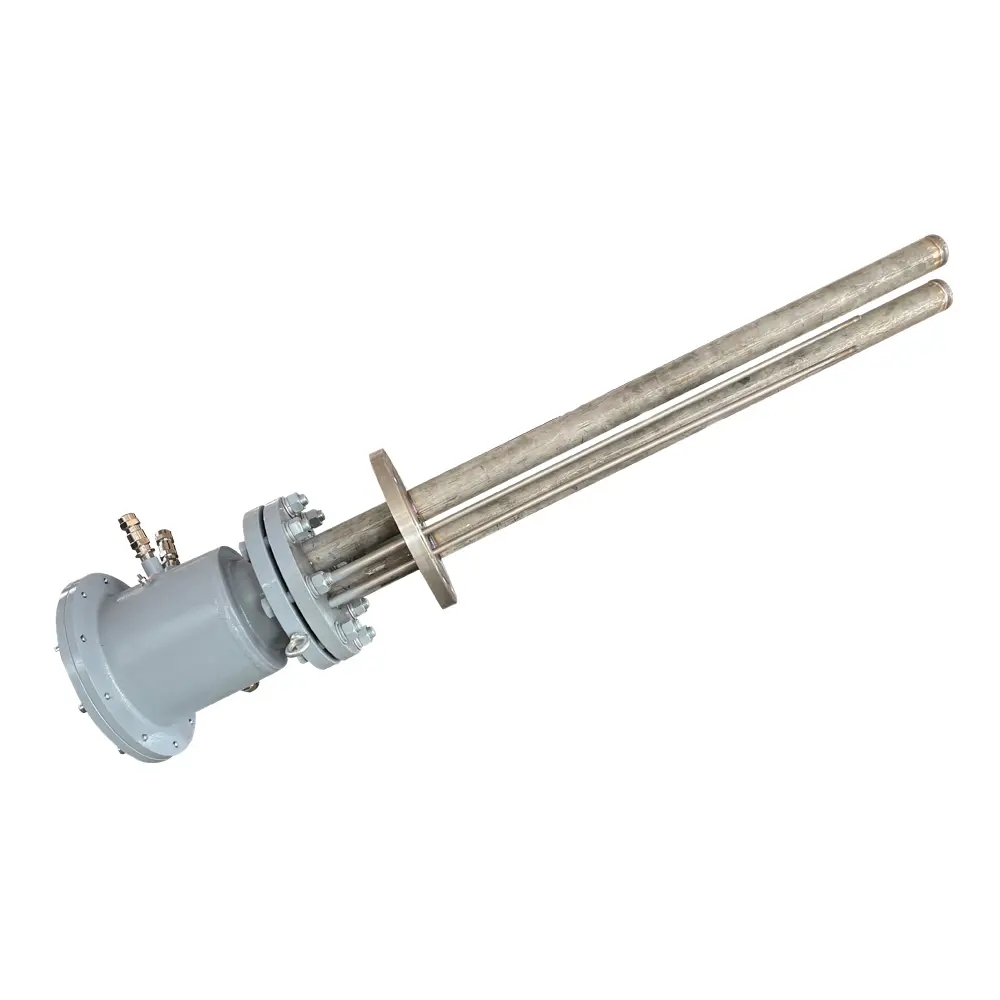 380V 6kW ATEX-Certified Explosion-Proof Flange Immersion HeaterThis certified flange immersion heater suits small to medium tanks in hazardous areas, with flameproof terminal box and ATEX/IECEx approval for Zone 1 and 2 locations.View Product →
The control equipment is just as important as the heater. Switching, protection, and temperature-control components located in the classified area need their own protection. A flameproof control cabinet, built to the same containment principle, is the conventional solution for housing these components and keeping the heating loop compliant.
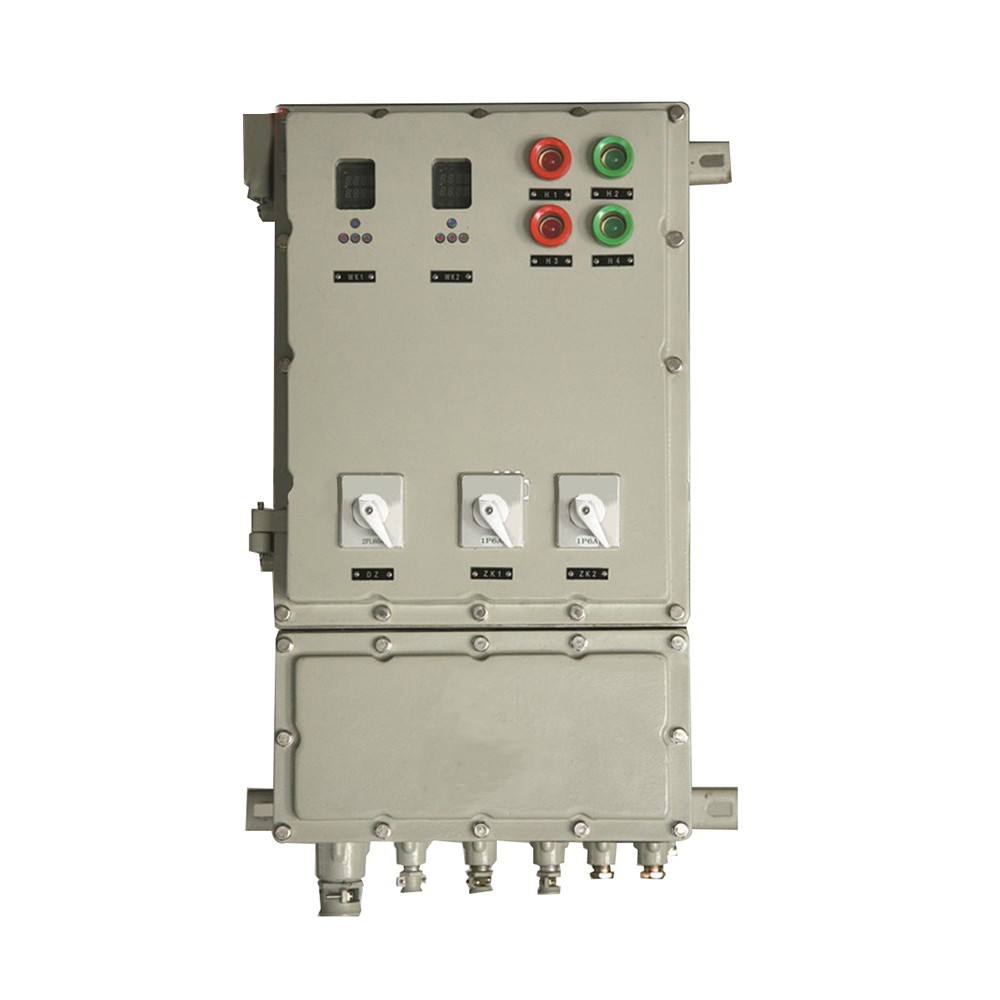 Flameproof Control Cabinet for Hazardous-Area Heating SystemsThis flameproof enclosure safely houses switching, protection, and temperature-control components for heating loops, containing internal explosions and suiting classified areas across industries.View Product →
Heat Tracing Control in Hazardous Locations
For pipelines and vessels that need temperature maintenance instead of high-power heating, electric heat tracing is a common solution, and it also creates a protection question. The heat tracing cable itself may use constant-wattage or self-limiting technology, but the control panel that feeds it must be suitable for the area. A heating trace control cabinet designed for hazardous locations combines power distribution, protection, and temperature control in a flameproof enclosure, so the entire tracing loop meets the same standard as the rest of the installation.
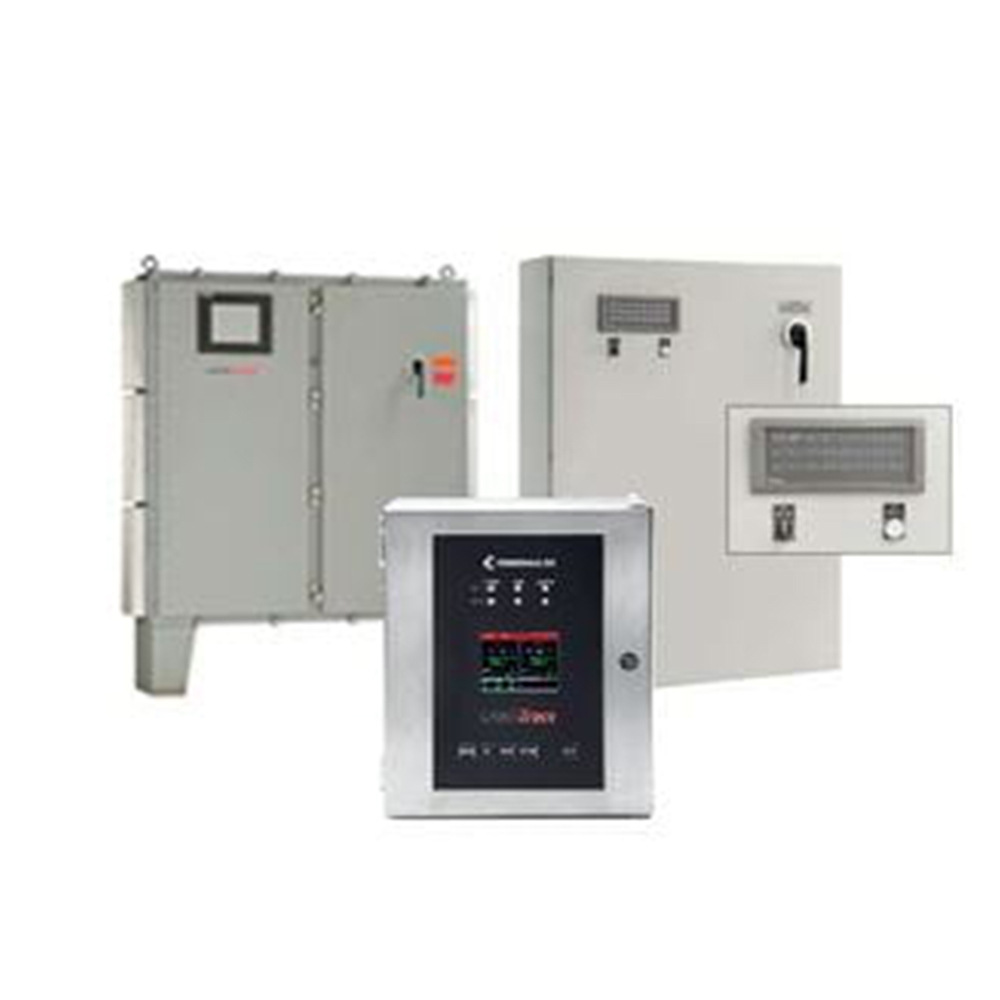 Heat-Tracing Control Cabinet for Hazardous LocationsThis control cabinet integrates temperature control, detection, and power management for electric heat tracing, supporting up to 72 circuits and suitable for general or hazardous environments.View Product →
The bottom line: intrinsically safe and explosion-proof are not interchangeable descriptions of the same safeguard. Intrinsic safety prevents ignition by limiting energy, which works well for instruments but not for power equipment. Explosion-proof construction contains an ignition inside a certified enclosure, which is what makes high-power heaters, control cabinets, and tracing panels feasible in hazardous areas. Match the protection method to the device function, verify the marking against your zone classification, and buy from a manufacturer that documents both its quality system and its hazardous-area approvals.

 English
 русский
 Français
 Español
 عربى
عربى
