You are standing in front of a specification sheet for an electric immersion heater that will go into a tank holding a flammable solvent. One supplier marks the unit "ATEX certified." Another offers "IECEx certified." Both labels claim to prove the heater is safe in a potentially explosive atmosphere, yet they are not interchangeable documents. The short answer: ATEX is a legal requirement for equipment sold into the European Economic Area, while IECEx is a voluntary international certification that many countries and project owners accept instead of or alongside a local approval. If your equipment is headed to the EU, you need ATEX. If it is headed to the Middle East, Southeast Asia, or other export markets, IECEx is often the more practical route. Here is what each certification actually covers and how to choose wisely.
What Is ATEX Certification?
ATEX comes from the French phrase Atmosphères Explosibles and refers to two European Union directives that govern equipment and workplaces in explosive atmospheres. Directive 2014/34/EU, sometimes called ATEX 114 or the Equipment Directive, sets the legal rules for placing electrical and mechanical equipment on the EU and EEA market. Directive 1999/92/EC, or ATEX 137, covers the protection of workers who may be exposed to explosive atmospheres.
Under 2014/34/EU, manufacturers must demonstrate that their equipment meets the Essential Health and Safety Requirements before it carries the CE mark. Depending on the equipment category, a Notified Body must review the design, audit the production quality system, and issue an EU-type examination certificate. The certificate number and the Notified Body's identification number are usually shown on the nameplate. Without that documented assessment, the equipment cannot be legally sold or commissioned in the EU.
What Is IECEx Certification?
IECEx is a global certification system operated by the International Electrotechnical Commission. It is not tied to a national law. Instead, it provides a standardized framework that countries and industries can adopt to certify equipment, service facilities, and personnel working in explosive atmospheres. The core document is the IECEx Certificate of Conformity (CoC), issued by an IECEx Certification Body (ExCB) after testing by an IECEx Test Laboratory (ExTL).
The IECEx system includes three main schemes. The Certified Equipment Scheme covers products built to the IEC 60079 series of standards. The Certified Service Facilities Scheme covers organizations that repair, overhaul, or re-rate Ex equipment. The Certificate of Personnel Competence (CoPC) scheme verifies individual workers, such as electricians and inspectors, against defined competency modules. Many countries outside the EU accept the IECEx CoC as the technical basis for their national approval, which is why it is frequently specified on international oil and gas projects.
ATEX vs IECEx at a Glance
The quickest way to understand the relationship is to compare their legal status, scope, and assessment route side by side.
ATEX and IECEx differ mainly in legal status and geographic scope; technically, both rely on the IEC 60079 standard family.
| Aspect |
ATEX |
IECEx |
| Legal basis |
EU Directives 2014/34/EU and 1999/92/EC |
IEC international scheme, voluntary unless adopted by local law |
| Geographic scope |
EU and EEA member states |
Accepted in many countries worldwide |
| Market status |
Mandatory for EU market access |
Voluntary, but often required by project specifications |
| Underlying standards |
Harmonized EN versions of IEC 60079 |
IEC 60079 standards directly |
| Assessment body |
Notified Body (ExNB) |
IECEx Certification Body (ExCB) |
| Certificate issued |
EU-type examination certificate plus declaration of conformity |
IECEx Certificate of Conformity (CoC) |
| Additional schemes |
No direct equivalent in the equipment directive |
Service facilities and personnel competence (CoPC) |
The table makes one point clear: the difference between ATEX and IECEx is not in safety philosophy but in legal recognition.
The Technical Foundation Is the Same
Although ATEX and IECEx are administered by different organizations, they use the same family of technical standards. Both rely on the IEC 60079 series, which covers protection concepts such as flameproof enclosures (Ex d), increased safety (Ex e), intrinsic safety (Ex i), and pressurized enclosures (Ex p). Both define equipment protection levels (EPL), gas groups, and temperature classes with the same terms and test methods.
In practice, most reputable manufacturers obtain both certificates from a single design. An ATEX certificate can be issued on the basis of an IECEx test report, and an IECEx CoC can be issued using ATEX assessment data, as long as the relevant standards are equivalent. This means an Ex d flameproof heater tested to IEC 60079-1 behaves identically whether the label says ATEX or IECEx. What changes is where that label is accepted and whether a local authority will recognize it. For a buyer, this practical equivalence means you should compare certificates at the level of standards and marking, not just the acronym printed on the datasheet.
Reading ATEX and IECEx Markings
A common misconception is that the two certifications require completely different nameplate markings. In reality, the technical core of the marking is nearly identical because both derive from IEC 60079-0. A typical ATEX marking would be II 2 G Ex d IIB T4 Gb, where II indicates surface industry equipment, 2 is the equipment category for Zone 1, and G stands for gas. The IECEx equivalent would be Ex d IIB T4 Gb, with the same protection concept, gas group, temperature class, and equipment protection level followed by the IECEx certificate number.
Whichever format appears on the nameplate, the code breaks down as follows:
- Ex — the equipment complies with explosion-protection constructional standards.
- d — the protection concept is a flameproof enclosure.
- IIB — the gas group, covering typical industrial gases such as ethylene.
- T4 — the temperature class, meaning the maximum surface temperature does not exceed 135 °C.
- Gb — the equipment protection level for Zone 1 areas.
An ATEX label adds the CE mark, the Notified Body number, and the directive reference. An IECEx label adds the certificate number issued by the ExCB. Once you understand the code, you can apply it to either label.
What to Verify Before You Buy
A certificate on a datasheet is not the same as a certificate that covers the exact product you intend to install. Before you commit to a purchase, work through this checklist:
- Confirm that the certificate number and the nameplate data match the specific model and power rating you are ordering. A certificate for a 380V 6kW heater does not automatically cover a 380V 45kW unit of the same design.
- Check the protection concept against the classified zone. Zone 0 requires the highest level of protection, while Zone 2 permits a lower level. The EPL on the marking must match your area classification.
- Verify the gas group and temperature class against the actual process fluids. The gas group determines whether the enclosure is safe for hydrogen, acetylene, or only less aggressive gases, and the temperature class must stay below the ignition temperature of the substances present.
- Look at the scope section of the certificate. It usually states the ambient temperature range, the ratings covered, and whether accessories such as thermostats and junction boxes are included.
- Search the certificate number on the IECEx online database or the relevant Notified Body directory. This takes less than a minute and protects you against overstated claims.
- Ask whether the manufacturer is the certificate holder or simply mentions someone else's certificate. The holder is the party responsible for continuing conformity.
For tank and vessel applications, these inspection points become even more important because a flange-mounted heater combines the heating element, the flange seal, and the terminal enclosure in one assembly. If any one of those parts is outside the certified scope, the entire installation can lose its compliance status.
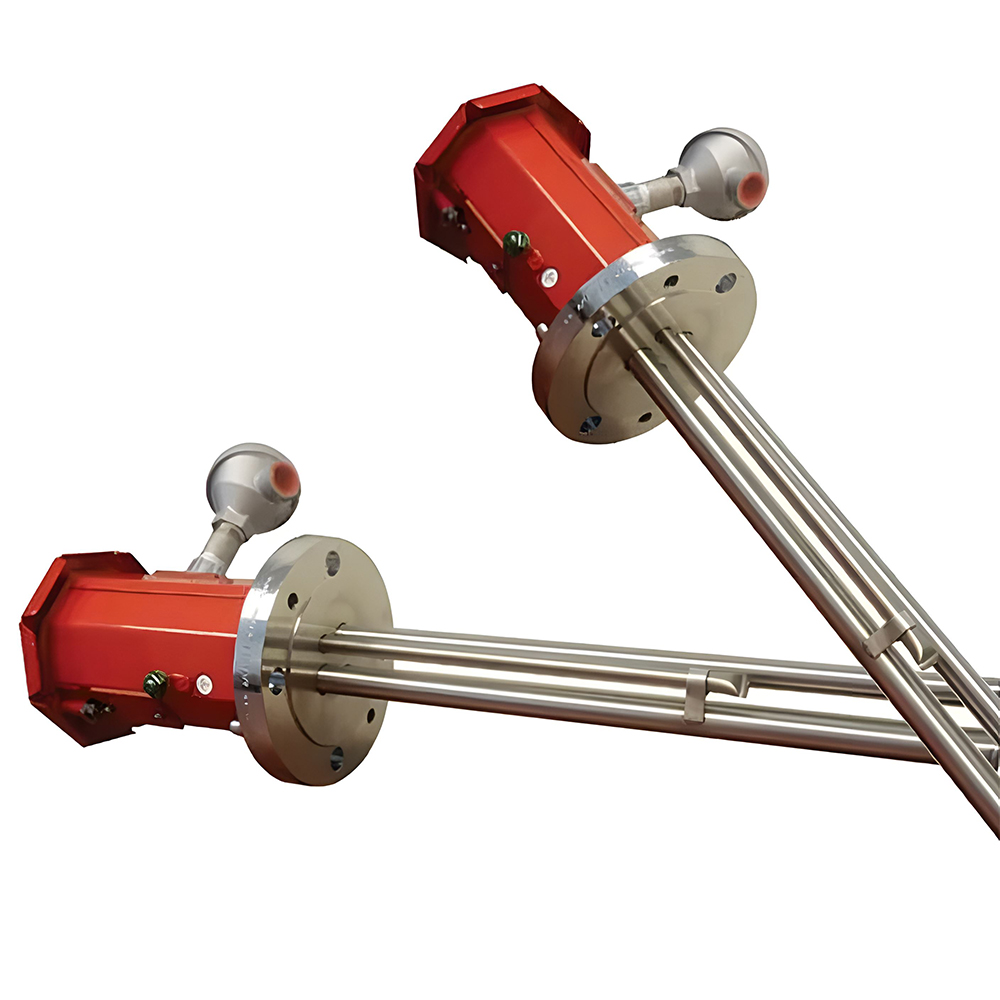 Certified Explosion-Proof Flange Immersion Heater for Hazardous AreasThis flange-mounted immersion heater combines heating elements, flange seal, and terminal enclosure in one certified assembly. With ATEX/IECEx approval, IP66 protection, and scalable power up to 3000 kW, it suits oil, gas, and chemical applications.View Product →
Choosing a Manufacturer With Valid Certification
For buyers, the credibility of the manufacturer matters almost as much as the certificate itself. A supplier that owns both ATEX and IECEx certifications, manufactures its own heating elements, and tests finished units in-house is a more reliable partner than one that simply attaches a third-party report to a catalog page.
Jiangsu Weineng Electric Co., Ltd. is one example of a manufacturer whose product range is built around hazardous-area requirements. The company produces explosion-proof immersion heaters, flameproof control cabinets, heat tracing cables, and packaged skid systems, and it states on its profile that it holds IECEx, ATEX, and ISO certificates. Its 380V 6kW immersion heater carries ATEX certification, making it a direct fit for projects that require a documented EU conformity route.
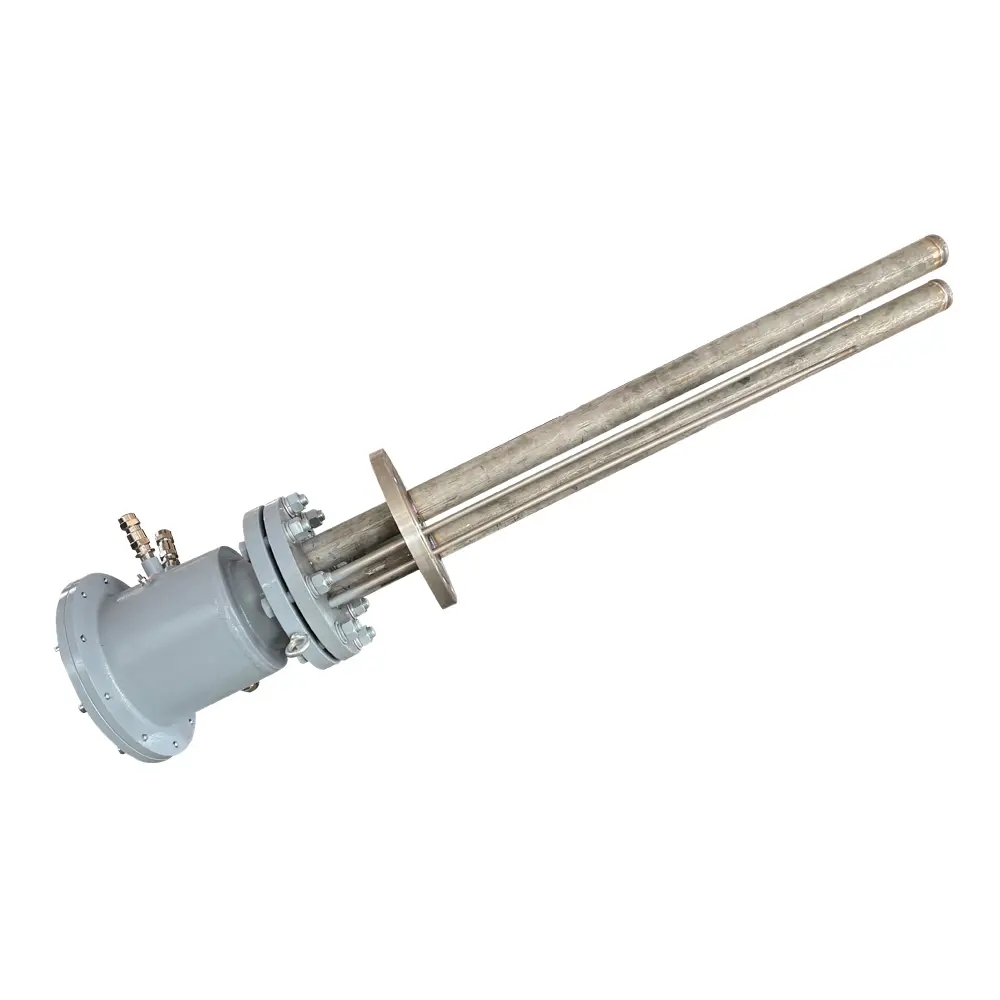 ATEX-Certified 380V 6kW Explosion-Proof Immersion HeaterThis 380V 6kW heater carries ATEX certification, making it a direct fit for projects that require a documented EU conformity route. With IP66 protection and robust materials, it delivers safe heating in hazardous zones.View Product →
The same logic applies to the control side of an installation. A flameproof heater is only as trustworthy as the control cabinet and the wiring that feed it. Weineng's flameproof control cabinets are designed for industrial branches with classified areas, which means the complete heating package, not just the heating element, can be kept within a certified environment. If you plan to commission a skid-mounted system, the control cabinet is part of the same certification review. When a manufacturer also accepts OEM and ODM orders, the certificate scope deserves even closer attention, because the brand on the nameplate may change while the certificate holder remains the original manufacturer, and your local inspector will want to see that link documented.
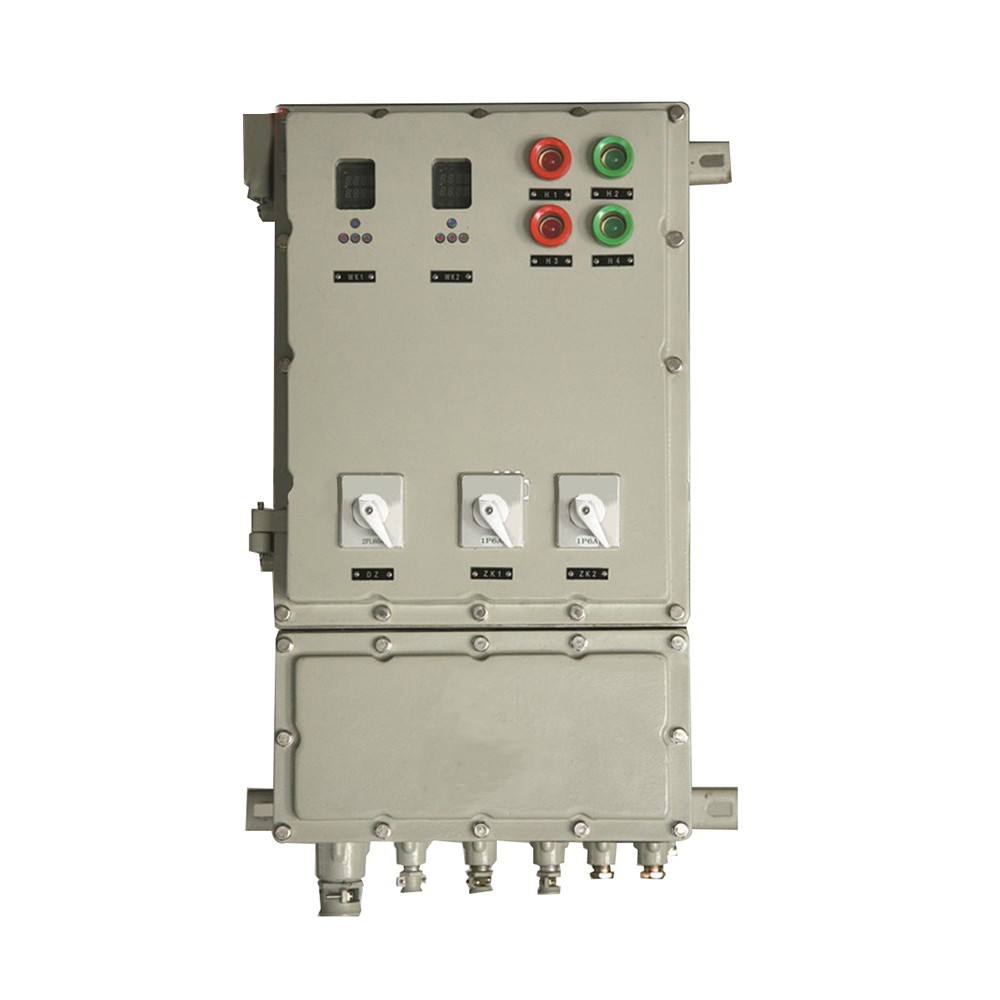 Flameproof Control Cabinet for Hazardous-Area Industrial HeatingThis flameproof control cabinet houses terminal blocks, selector switches, and push-buttons, preventing arcs from igniting explosive atmospheres. It supports a certified heating package for hazardous industries like oil, gas, and chemical processing.View Product →
If you want to review a supplier's stated qualifications before engaging them, the company's honor page lists its certificates and related recognitions. For a closer look at how explosion-proof heaters are built and installed, the company's technical article on the structure, installation, and operation of explosion-proof electric heaters is a practical read.
The Bottom Line
If your equipment will be installed in the European Economic Area, ATEX is non-negotiable. If it is destined for an international project in the Middle East, Asia, or other export markets, IECEx is usually the more global path. For projects with a centralized engineering specification, either certificate is commonly accepted, provided the protection concept, gas group, temperature class, and EPL on the nameplate match the hazardous area classification.
The practical approach is simple: define the zones and fluid properties first, then compare the certificate scope, not just the certificate name. That comparison will tell you whether an ATEX-certified 380V 6kW immersion heater fits your Zone 1 vessel, or whether you need a flange-mounted unit from the same certified range. When the certificate matches the application, the installation is safer, the handover is smoother, and the export paperwork stops being a bottleneck.

 English
 русский
 Français
 Español
 عربى
عربى
