When you specify an electric heater for a volatile process stream, the first technical question that usually comes up is whether it must have ATEX certification, IECEx certification, or both. The terms look similar, and they describe the same kind of safety assurance. But they are not interchangeable in every market. The answer matters for your project schedule, your procurement cost, and your regulatory exposure.
ATEX and IECEx: The Bottom Line
ATEX and IECEx are built on the same international standards, and a product that passes one often can be certified to the other with minimal additional testing. The practical difference is legal authority. ATEX is a mandatory European Union directive. IECEx is a voluntary international certification scheme. If you install equipment in the European Economic Area, ATEX is usually the legal requirement. If you ship equipment to other regions, IECEx is accepted in many jurisdictions as proof of compliance with the same technical criteria.
This distinction is not merely administrative. It affects which body issues the certificate, what marking appears on the nameplate, and how the certificate is verified by local inspectors. For a manufacturer, it also changes the documentation package you must provide with the heater.
Key Differences at a Glance
The table below summarizes the operational differences that matter when you are selecting equipment for a classified area.
Comparison of ATEX and IECEx certification frameworks
| Attribute |
ATEX |
IECEx |
| Governance |
European Union directive 2014/34/EU |
International Electrotechnical Commission system |
| Legal status |
Mandatory for equipment placed in the EU/EEA |
Voluntary, but widely accepted globally |
| Standards basis |
EN 60079 series (equivalent to IEC 60079) |
IEC 60079 series |
| Certificate type |
EU Type Examination Certificate |
IECEx Certificate of Conformity |
| Assessment body |
Notified Body under the directive |
ExCertification Body (ExCB) in the IECEx scheme |
| Typical marking |
Ex II 2 G Ex d IIC T6 Gb |
Ex d IIC T6 Gb |
| Primary market |
European Economic Area |
Global, including Europe and other regions |
Both systems rely on the same protection concepts: flameproof enclosures, intrinsic safety, increased safety, and similar techniques. The technical requirements for thermal performance and explosion resistance are virtually identical.
Certification Process and Equipment Marking
Getting an ATEX certificate starts with a technical evaluation by a Notified Body. The body reviews the design drawings, performs tests on prototypes, and audits the manufacturer's quality system. Once the certificate is issued, the device carries the ATEX marking plus the specific Ex code that defines the gas group, temperature class, and protection level.
For IECEx, the procedure is similar but uses an ExCertification Body (ExCB) and a separate quality assessment. The IECEx system also has mutual recognition agreements among member countries, which can reduce the need for repeated testing when you sell into multiple regions. This is one reason many global suppliers prefer to obtain IECEx as a baseline and then add ATEX for the European market.
What the Marking Tells You
The equipment marking is not arbitrary. In the string Ex d IIC T6 Gb, each segment has a specific meaning. Ex indicates explosion protection. d means flameproof enclosure. IIC indicates the gas group (hydrogen and acetylene are in group IIC). T6 sets the maximum surface temperature at 85 degrees Celsius. Gb shows the equipment protection level for zones 1 and 2. Understanding this code is critical when you match a heater to an area classification certificate.
Choosing the Right Certified Equipment for Your Process
Selecting a heater for a hazardous location requires more than just comparing price or wattage. You must confirm that the equipment protection level matches the zone, that the temperature class is below the ignition temperature of the process fluid, and that the enclosure rating withstands the environmental conditions. For example, a flameproof immersion heater used in a chemical reactor must have a properly certified terminal box and a mechanical seal that prevents gas ingress.
We manufacture explosion-proof immersion heaters that are certified to both ATEX and IECEx standards. The 380V 6kW explosion-proof immersion heater is designed for zone 1 and zone 2 locations, with a flameproof enclosure and an IECEx-recognized quality system behind it.
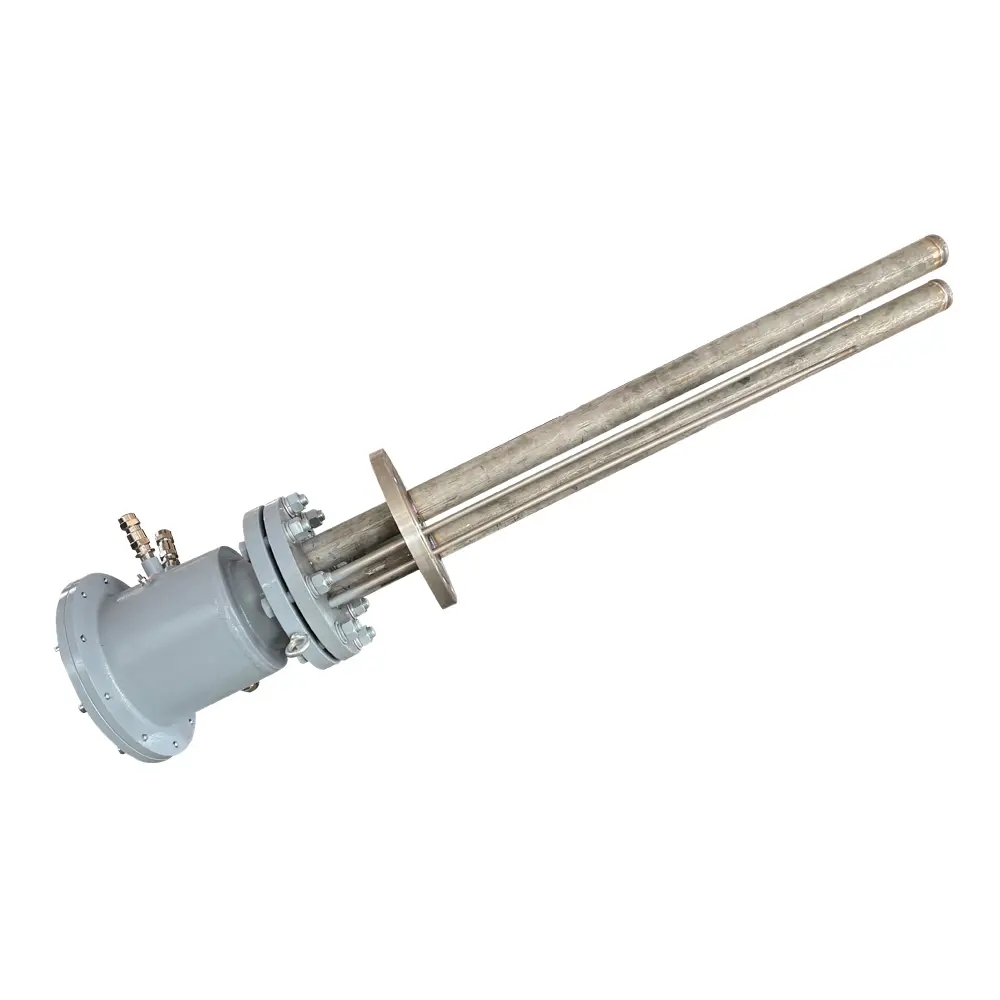 380V 6kW ATEX and IECEx Certified Explosion-Proof Immersion HeaterCertified for Zone 1 and 2 hazardous areas, this heater features a flameproof enclosure and IP66 protection, with corrosion-resistant materials like Inconel and stainless steel for reliable industrial heating.View Product →
When the process requires integrated temperature control, the control cabinet is just as important as the heater itself. A flameproof control cabinet for all industrial branches provides the switching and monitoring functions inside a certified enclosure, eliminating the risk of a spark igniting a hazardous atmosphere.
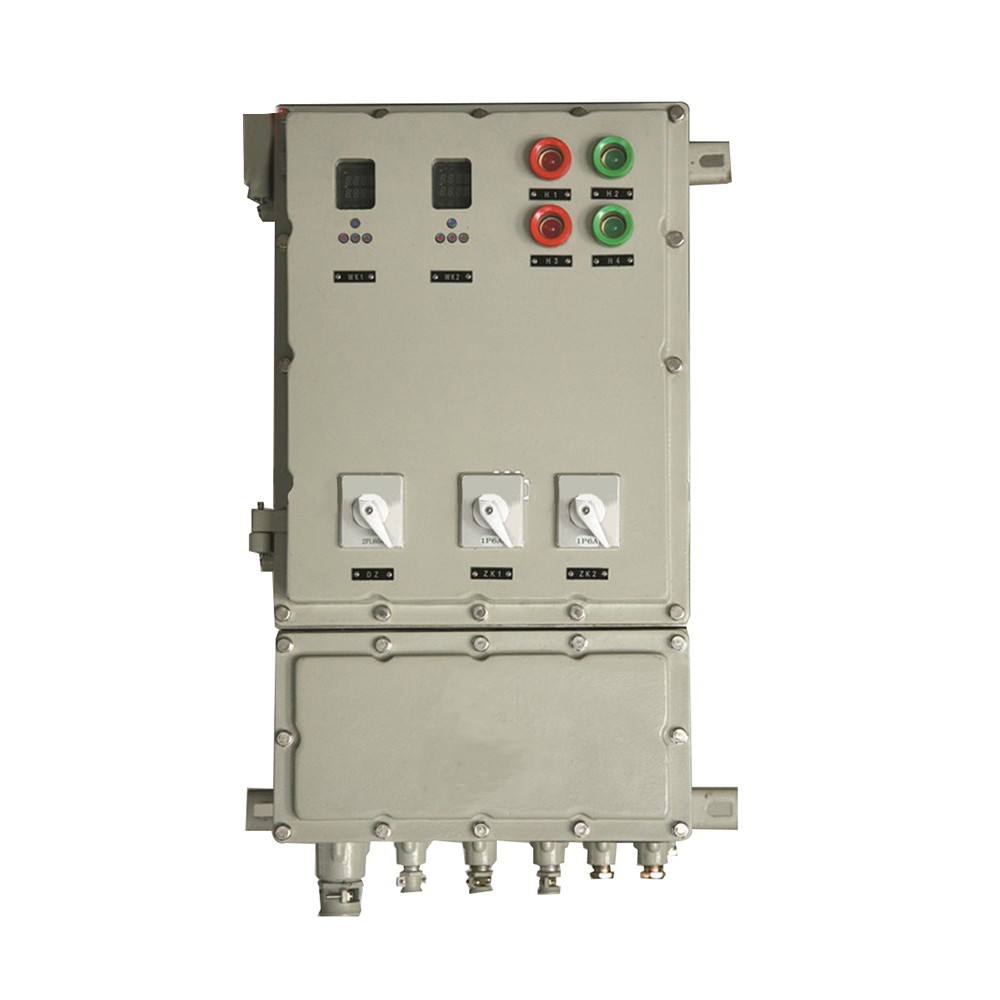 Flameproof Control Cabinet for Hazardous Industrial EnvironmentsDesigned for hazardous areas, this cabinet houses switching and monitoring electronics in an explosion-proof enclosure, preventing ignition from sparks and ensuring safe control of industrial heaters.View Product →
For pipework and equipment that must remain above freezing or maintain process temperature, the heat trace system also needs appropriate certification. Our heating trace control cabinet for hazardous locations is designed to control heating cables in classified areas, combining temperature sensing with overcurrent protection in an explosion-proof housing.
 Heat Trace Control Cabinet for Hazardous LocationsThis cabinet integrates temperature control and monitoring for heat tracing systems, with circuits for various applications, and is built to operate safely in hazardous environments, ensuring process temperature maintenance.View Product →
In each case, the certificate is not a one-time transaction. It imposes ongoing quality control obligations, including periodic audits and type consistency checks. When you purchase from a manufacturer that holds both ATEX and IECEx certificates, you receive a single component set that can be deployed across regional borders with minimal documentation changes.
Verifying Manufacturer Compliance and Procurement Risks
When you evaluate a supplier for hazardous area heating equipment, ask for proof of certification rather than a summary statement. A certified manufacturer will hold an ATEX or IECEx certificate number that can be checked against public databases. The certificate should list the exact product model, the standards applied, and the issued date. If a supplier says they have “ATEX certified products” but cannot provide the original EU Declaration of Conformity, treat that as a major red flag.
There is also a risk that comes with buying uncertified equipment for a classified area. The consequences are not just a failed inspection. An ignition from an improperly marked heater can cause a fire or explosion that injures workers and shuts down production. The legal responsibility in the European Union falls on both the manufacturer and the owner of the plant. This is why the certificate must match the specific unit you install, not just the product family.
Our company has been manufacturing industrial electric heaters and control systems since 2009, and we hold ATEX, IECEx, and ISO certificates to support our own quality management system. You can review our certification and honors to see the documents we make public, and we are happy to provide specific certificate copies for any model you request.
Practical Guidance for Your Purchase Decision
Start by determining the zone classification and the gas or dust group for your application. Then check the equipment protection level and temperature class against that classification. If the equipment will be installed in the European Economic Area, ATEX certification is non-negotiable. For export to other regions or for projects that need to meet multiple national requirements, IECEx gives you a solid international baseline.
When you order from a manufacturer, ask for the certificate number, the marking on the nameplate, and the supporting test reports. For a robust supply chain, choose a supplier that can provide both ATEX and IECEx from the same manufacturing line. This avoids the cost and delay of dual qualification. We offer a comprehensive range of certified industrial heaters and controls on our product page.
If you are replacing an existing heater or commissioning a new system, the level of assurance you demand should be defined at the specification stage. The cost of a certified heater is higher than an ordinary equivalent, but the risk of not having it is far higher. Invest in equipment that is certified to the correct standard for the area where it will operate, and you will pass inspection, protect workers, and stay in compliance over the long term.

 English
 русский
 Français
 Español
 عربى
عربى
